Hong Kong · martial-arts travel
Why Train Kung Fu in Hong Kong? A Martial-Arts Traveller’s Guide
People travel to Hong Kong for many reasons: food, architecture, film, history, shopping, hiking and the energy of a dense city. A martial-arts traveller may be looking for something more specific. They may want to train in a place where Chinese martial arts are part of the city’s public cultural imagination, then understand the practice through people, places and patient instruction.
What makes Hong Kong meaningful for martial-arts travellers?
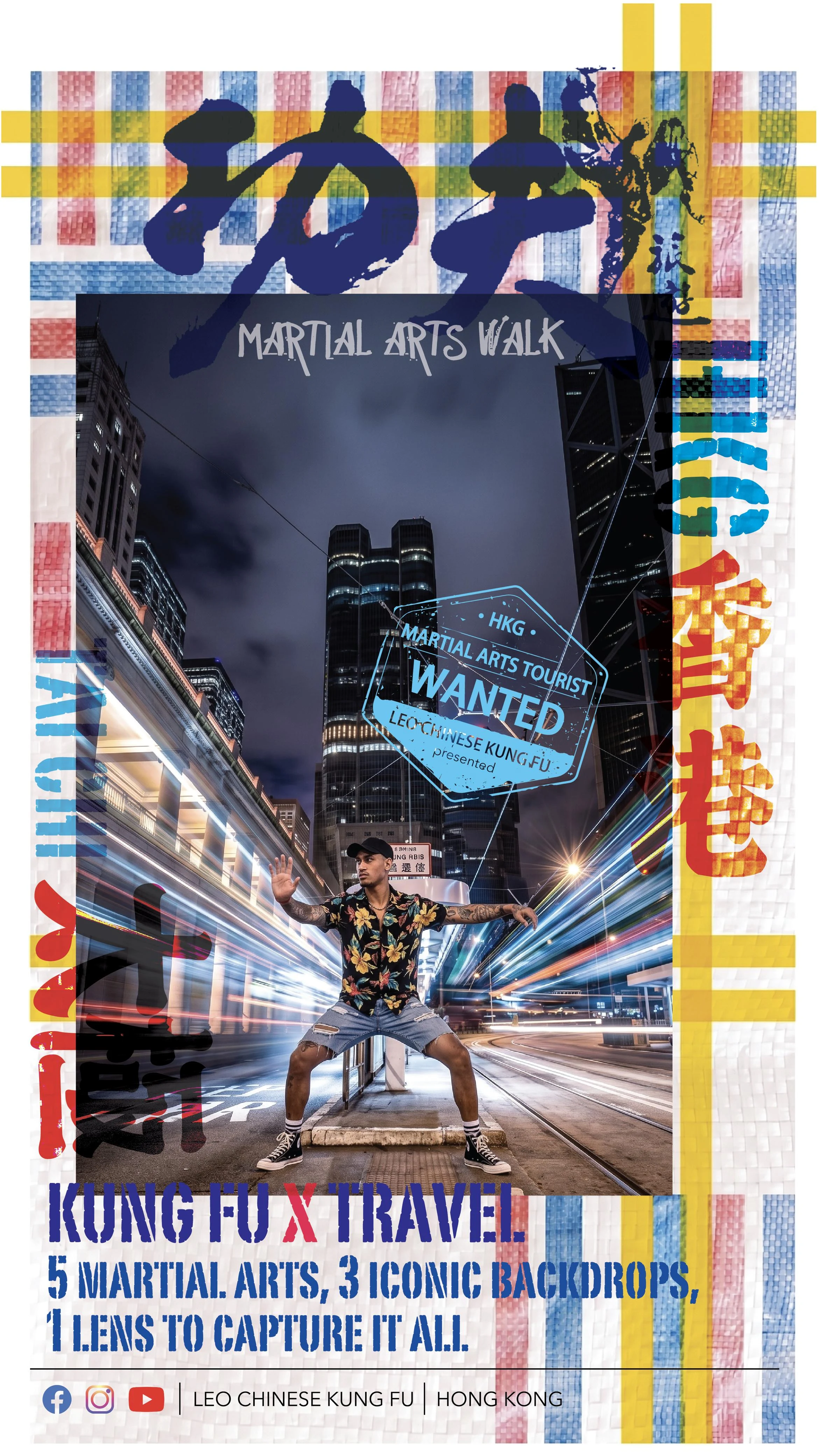
Hong Kong after dark. Supplied Kung Fu Travel visual; it is used here to introduce the destination context, not to imply a confirmed itinerary location. Hong Kong is not a magic shortcut to skill. Travelling there does not replace regular training, and a famous location does not automatically make a class good. But the destination can change the questions a traveller asks. Instead of studying Kung Fu only as an abstract technique, the visitor can pay attention to lineage, teaching, local context, movement and the relationship between martial arts and Hong Kong’s visual culture. The Hong Kong Tourism Board describes the city as having profound ties to traditional Chinese martial arts and currently presents a visitor-facing Wing Chun experience that combines a lesson with cultural exploration. That does not validate every martial-arts tour. It does show why Hong Kong continues to attract people who want to connect training with place. The first reason is context. A martial art is taught in a room, but it is also carried through relationships, language, stories, demonstrations, photographs, films and everyday practice. Hong Kong’s martial-arts identity has been shaped by both traditional Chinese practice and international cinema. That combination is especially relevant to travellers who want to understand how a local art can become globally recognisable without being reduced to a movie image. The second reason is density. Hong Kong’s neighbourhoods offer very different experiences within a relatively compact urban environment. The Hong Kong Tourism Board describes the city through local neighbourhood experiences, cultural exploration, food and arts rather than as a single uniform backdrop. A training project can therefore move between disciplined practice and the visual, architectural and social texture of the city without pretending that every location has the same meaning. The third reason is conversation. Visiting a class for one hour can be interesting. Spending a week around teachers, practitioners and other travellers allows more time to ask how an exercise is taught, what a form is for, why a correction matters and how a movement changes when the practice moves from the training room into a filmed or photographed setting.
Hong Kong, Wing Chun and Master Leo’s background
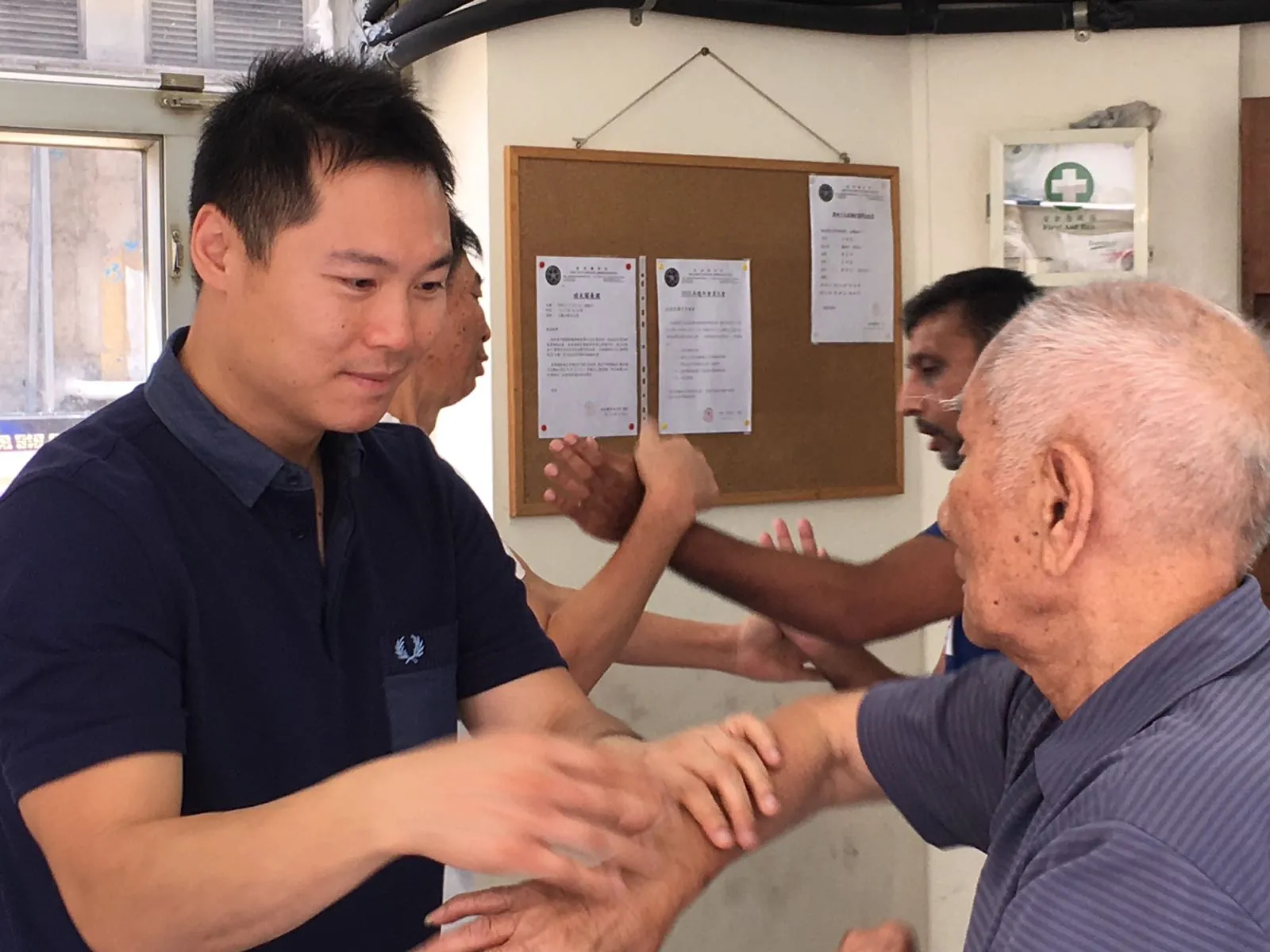
Master Leo Au-Yeung’s public biography gives the Hong Kong connection a specific shape. The official academy instructors page states that he learned Wing Chun directly from Grandmasters Ip Chun and Ip Ching in Hong Kong. It also describes him as Head of School and Fight Choreographer. Master Leo practising Chi Sau in Hong Kong while his students train alongside. Supplied archive photograph; context and caption follow the approved photo record. Those are public biographical points, not a reason to exaggerate the destination. They help explain why a Hong Kong training experience belongs in the story of Master Leo’s work. His practice connects traditional Wing Chun teaching, broader Chinese martial-arts study and the demands of film and movement design. A visitor should still separate three things: Keeping those categories separate makes the travel decision clearer. Hong Kong has a meaningful martial-arts context. Master Leo has a documented personal connection to Hong Kong training. The April 2027 project has its own published inclusions, limits and confirmation process.
- the history and lineage of a martial art;
- the teaching approach of a particular instructor or school;
- the experience offered by a specific trip.
Is training in Hong Kong only for experts?
Not necessarily, but suitability should be discussed rather than assumed. A serious martial-arts trip can include people with different levels of experience, but the right format depends on the actual schedule, intensity, recovery time and the expectations of the organisers. A beginner should ask what the sessions involve and how new participants are introduced. An experienced practitioner should ask whether the project offers enough depth for their goals, how the different styles are sequenced and how partner work or contact is handled. Someone travelling with another person should clarify whether both travellers need to train and how places are counted. The current project page does not promise a universal result or describe the trip as a substitute for long-term instruction. It presents a seven-day experience with five listed styles, five different Kung Fu masters, hotel accommodation, filming and coordinated movement between selected locations.
What does a martial-arts travel experience add to training?
Travel can make familiar ideas more visible. A practitioner may notice how a teacher uses space, how a group settles before practice, how a form is demonstrated or how a correction is explained to someone from another country. Those observations may be as valuable as a new technique. Travel also introduces friction. Jet lag, heat, walking, changing schedules and unfamiliar food can affect concentration. A good programme needs enough organisation to protect the training experience rather than treating logistics as an afterthought. That is why the practical questions matter: where participants stay, how they move between sessions, what they need to bring and which costs remain outside the package. The April 2027 project lists hotel accommodation, transportation to filming locations, trip organisation and coordination. It excludes international flights, meals, travel insurance and personal expenses. Those details allow a traveller to budget honestly rather than confusing a structured martial-arts project with an all-inclusive holiday.
Training, culture and the camera
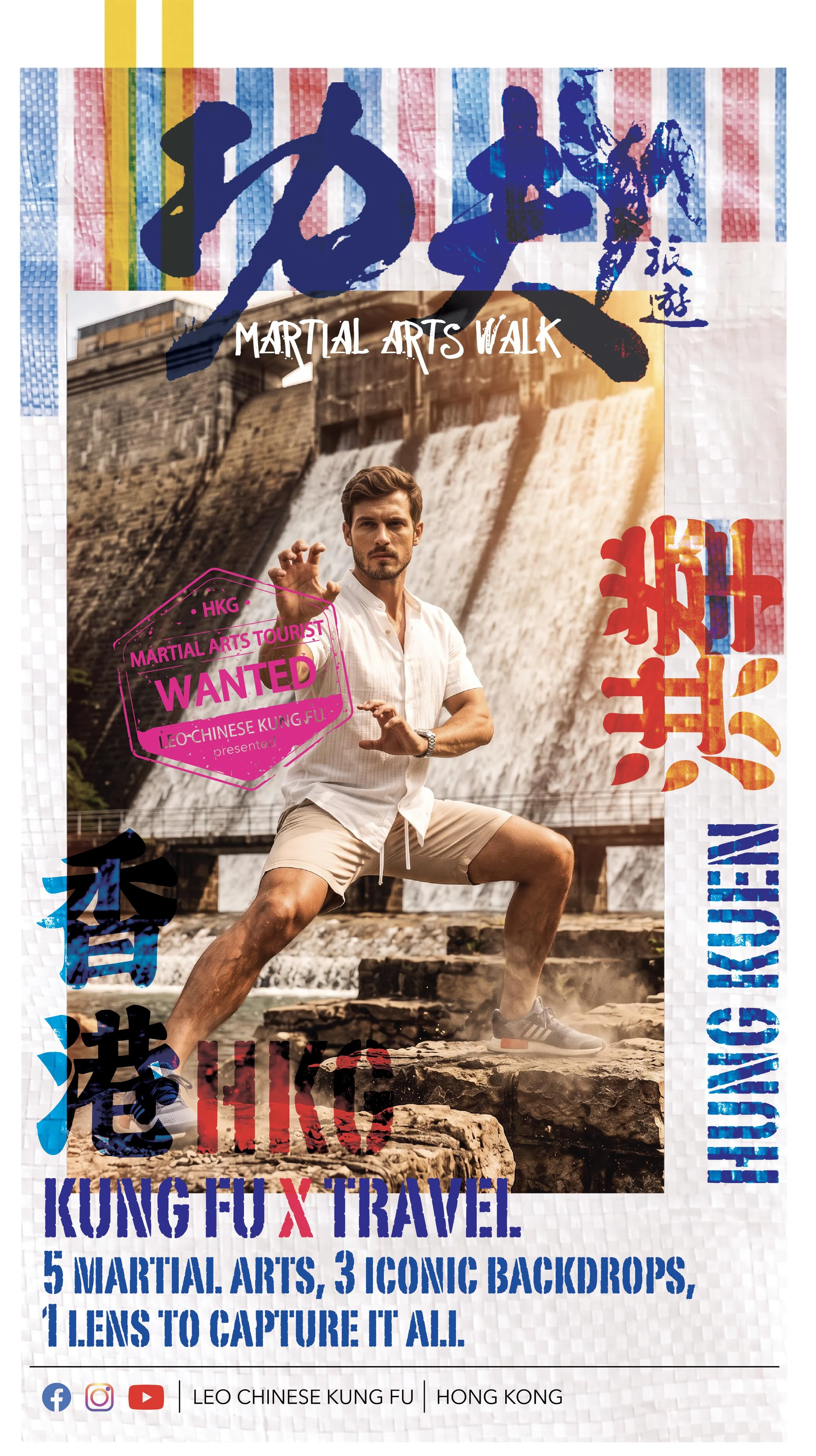
Hong Kong’s relationship with martial arts is also connected to visual culture. The Hong Kong Tourism Board’s arts-and-culture material describes the city’s cultural offering as a meeting of eastern and western influences, traditional and contemporary expression, and heritage. That is a useful context for a project that includes professional filming and edited short videos. Filming is not just decoration. It asks participants to consider how movement reads in a place. A training action may look different when it is seen against a narrow street, a waterfront, a hillside or a historic structure. The camera can preserve a memory, but it can also simplify. A well-made travel film should not be mistaken for a complete record of the martial art. Walk the landscape. Supplied Kung Fu Travel visual; it illustrates the project’s travel-and-filming dimension without identifying a final itinerary location. Master Leo’s public work in film choreography makes this part of the project understandable. The camera is treated as another environment in which movement has to be organised. The training remains real practice; the film layer gives the week a documentable story.
How to choose a Hong Kong Kung Fu experience
Not every martial-arts travel offer has the same purpose. Before you book, look for clear answers to these questions: 1. Who is teaching, and what is publicly documented about their background? 2. Is the programme built around one style or several? 3. How much training is included, and how much time is left for recovery? 4. Are accommodation, transport and filming included or separate? 5. Are the final teachers and locations confirmed? 6. What is the group size? 7. What is not included in the price? 8. How are participant images and video handled? 9. What is the cancellation or change policy? 10. What happens after you register interest? The most trustworthy answer is often the one that states what is known and what is still being confirmed. A page that invents a detailed itinerary months in advance may sound exciting, but it gives the traveller less control over the decision.
Master Leo’s April 2027 Hong Kong project
Master Leo’s current flagship project is a seven-day Leo Chinese Kung Fu — Hong Kong Training Trip planned for April 2027. It is limited to 6–8 participants and lists Wing Chun, Hung Gar, Tai Chi, Chinese Wrestling and one secret style revealed on the trip. The current price is £1,800 per person. The early-bird price is £1,700 per person when booked by 30 November 2026. The stated payment plan—£480 followed by four monthly instalments of £305—totals £1,700, matching the early-bird price. Confirm the payment schedule that applies to your chosen rate directly before booking. The booking deadline is 30 December 2026. The package includes training with five different Kung Fu masters, hotel accommodation, a professional filming crew, three locations for filming and photography, short-video production, editing, transport to filming locations and trip coordination. Final participating masters, day-by-day locations, travel arrangements and terms are confirmed directly with registered participants. If that combination of training, travel and visual documentation fits what you are looking for, explore the full project details and register your interest.
Frequently asked questions
Is Hong Kong a good place to learn Kung Fu?
It can be a meaningful place to study, especially for someone interested in the relationship between Chinese martial arts, lineage, culture and Hong Kong’s film history. The quality of the actual school, teacher and programme still matters more than the destination label.
Can I train in Hong Kong without joining a week-long trip?
Yes. Hong Kong has different schools, classes and visitor experiences. The Hong Kong Tourism Board lists a Wing Chun experience tour as one example, but each provider’s schedule and terms must be checked directly.
Does Master Leo teach in Hong Kong full time?
The official academy biography documents his Hong Kong training background and his current teaching and choreography work. The April 2027 page is the source for the specific travel project and its registration process.
What should I budget for besides the project price?
The current offer excludes international flights, meals, travel insurance and personal expenses. Allow for those separately, and wait for the confirmed travel arrangements before treating any estimate as final.
How can I join the April 2027 project?
Read the current offer and register your interest through the Hong Kong Kung Fu Training Trip page. The organisers can then provide the next confirmed details.