Wing Chun · partner practice
What Is Chi Sau? A Guide to Wing Chun Sticking Hands
Chi Sau is a partner-contact practice in Wing Chun. This guide explains what that contact can help students explore—and what a cooperative drill cannot prove.
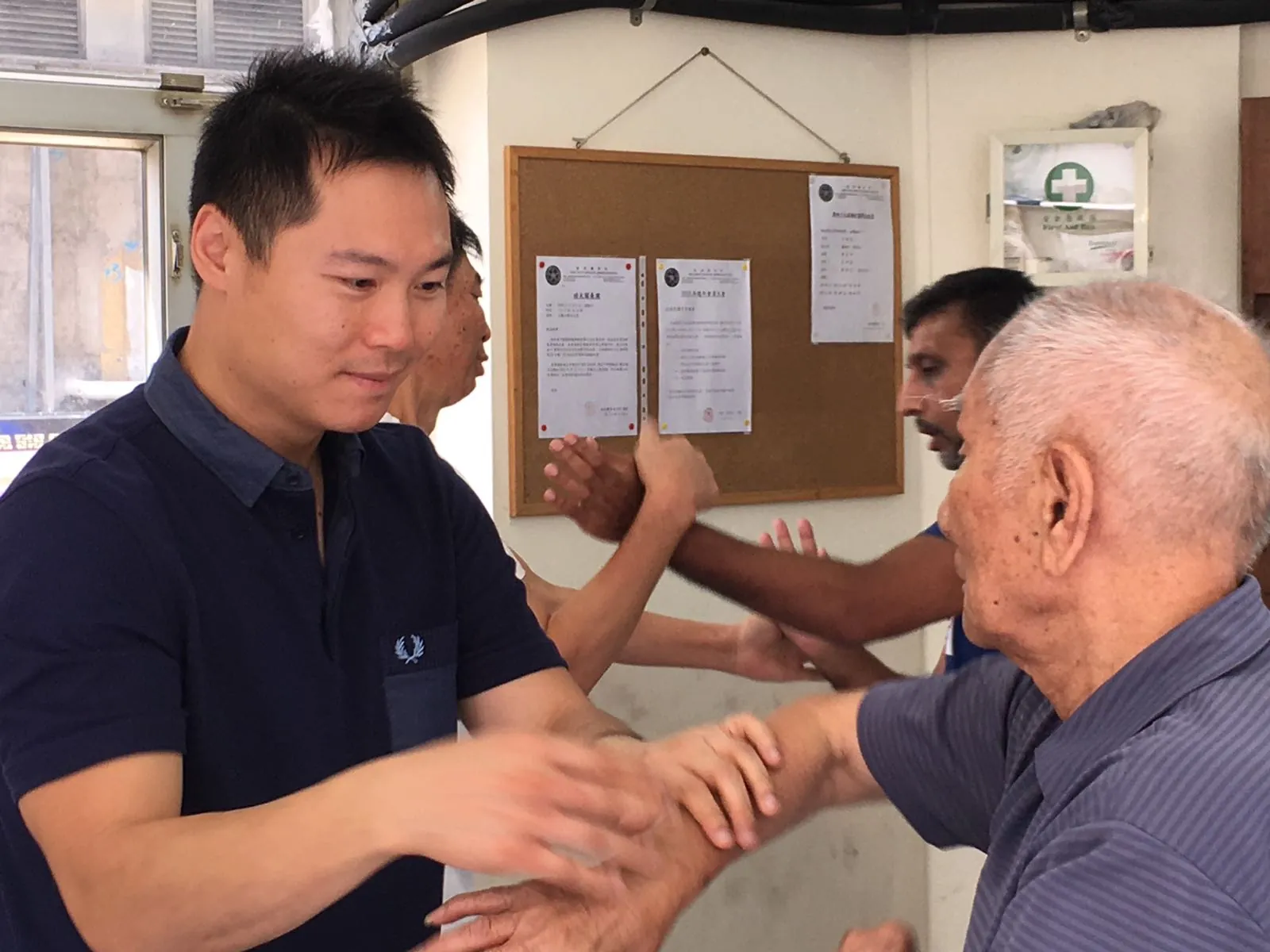
What does Chi Sau mean?
Chi Sau is often translated as “sticking hands”. It is a Wing Chun partner exercise in which people maintain or re-establish contact through the arms while working with position and pressure. The contact gives each person information to notice; the exercise is not simply a sequence of hand shapes performed in the air. The name does not describe one universal routine. Schools and lineages organise the practice differently. The International Wing Chun Academy, for example, describes its own Chi Sau teaching through rolling-arm work and progressive drills. That is a useful example of one school’s approach, not a syllabus shared identically by every Wing Chun teacher.
Why work through contact?
Contact changes what a student has to pay attention to. A partner can alter pressure, position and timing, so the student must notice a change rather than rely only on a memorised movement. In a controlled drill, the aim may be to keep a usable position, respond without unnecessary tension or recognise when the contact has changed.
A family of drills, not a single finished skill
The shape and pace of Chi Sau can change as partners learn. Some teaching starts with a repeated pattern; other practice introduces choices or changes gradually. Benjamin Judkins describes Chi Sau as a family of sensitivity exercises that abstracts from freer exchange. His discussion is a practitioner-scholar analysis, not a controlled experiment or a universal definition. A familiar pattern can help two people understand the task, but a pattern is still a pattern. Students should know whether an exercise is cooperative, what kind of response is invited and when the teacher is changing the task. Naming those conditions keeps a drill’s purpose clear rather than treating every repetition as proof of practical ability.
How Chi Sau fits into wider Wing Chun training
Chi Sau is one part of training, alongside solo forms, stance and stepping work, other partner exercises and instruction about how movements are used. Each activity answers a different question. A form can be rehearsed without a partner; a contact drill lets two students respond to touch; neither alone covers every element of practice. The Hong Kong Intangible Cultural Heritage entry for Yip Man Wing Chun lists forms and the wooden dummy in its account of that specific tradition. It does not define Chi Sau. That distinction is a reminder to read a source for what it actually documents and not to turn one lineage’s inventory into a complete description of every school.
What Chi Sau cannot tell you
A cooperative exchange takes place with another person who has agreed to a particular exercise. It does not reproduce the full uncertainty of an unscripted encounter, and it is not the same as sparring. The pressure, speed, rules and goals may all be different from one drill to another. Doing well in Chi Sau therefore does not establish that someone can handle every conflict or guarantee self-defence. A training method should be understood within its limits. Personal safety involves more than physical technique, and a student should not confuse success inside a bounded exercise with a guaranteed outcome outside class.
What responsible teaching should make clear
Before contact begins, students should understand the exercise, the expected level of pressure and how to pause or stop. The instructor can explain what the drill is intended to practise, how partners should communicate and what the next step is. Beginners should not have to guess whether a movement is cooperative or whether more force is expected. Useful feedback is specific: what changed, what the student noticed and which part of the task to repeat. It is also reasonable to ask how a school progresses from a familiar pattern to less predictable partner work. Those questions help a student judge the teaching, rather than relying on slogans about what Chi Sau will automatically deliver.
Can you practise Chi Sau alone?
You can review movements or practise a teacher-approved sequence without another person, but that is rehearsal rather than Chi Sau itself. A wall, dummy or imagined partner cannot change pressure in response to you. Solo repetition may help you remember a movement; it cannot supply a partner’s timing, touch or correction. If you are learning the exercise, use instruction to establish what to practise and work with a partner at an agreed level. The academy’s current Wing Chun and private-session pages provide direct routes for checking its classes and one-to-one training. The right format depends on the student’s question and should be confirmed with the school.
A useful way to approach the drill
Treat Chi Sau as a question-led practice: what information is the contact giving, what does the exercise ask you to do and what changes when the partner responds differently? Keep the task small enough to understand. Ask for a reset when the pattern or pressure becomes unclear, and listen to both the partner and instructor.
From the archive
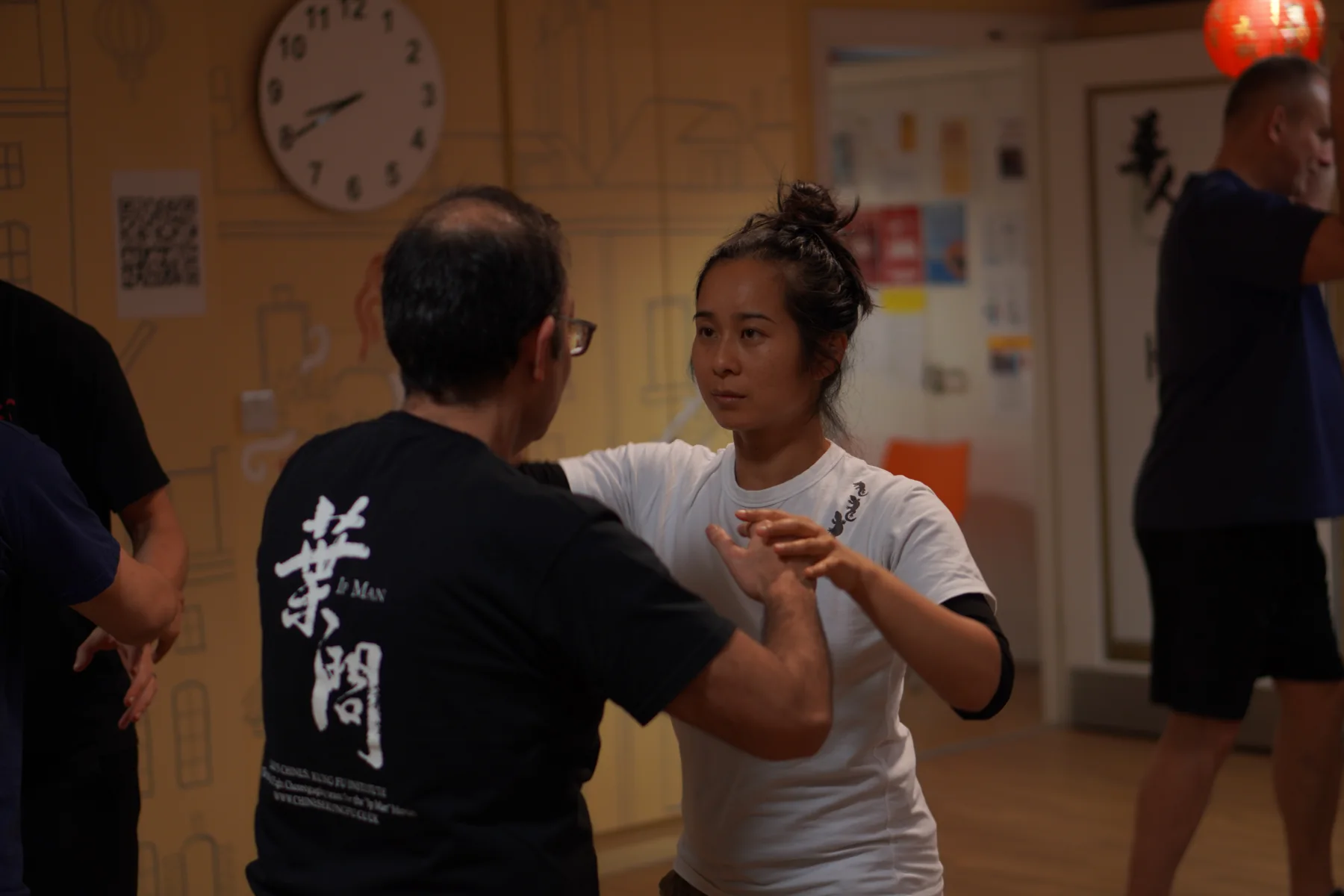
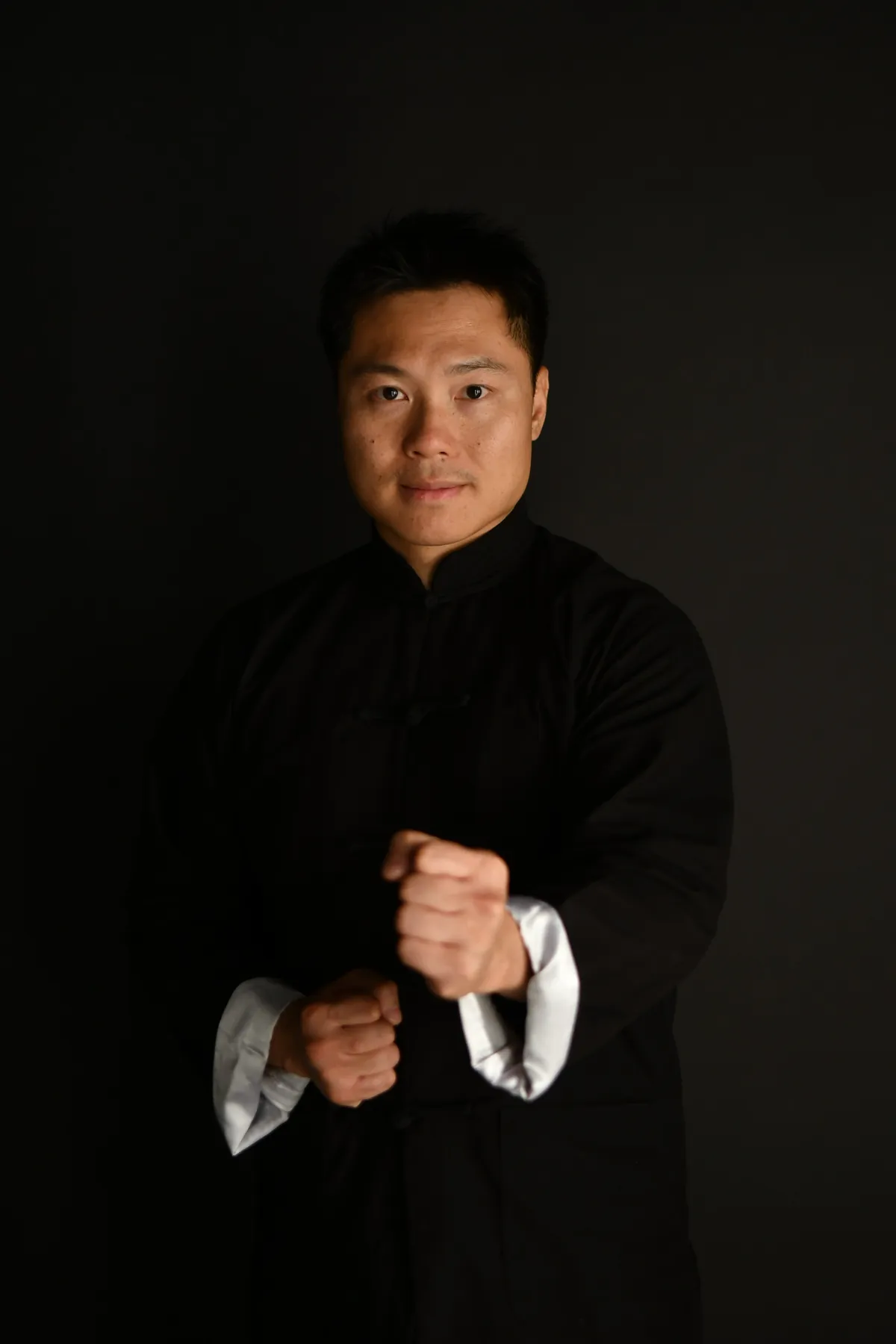
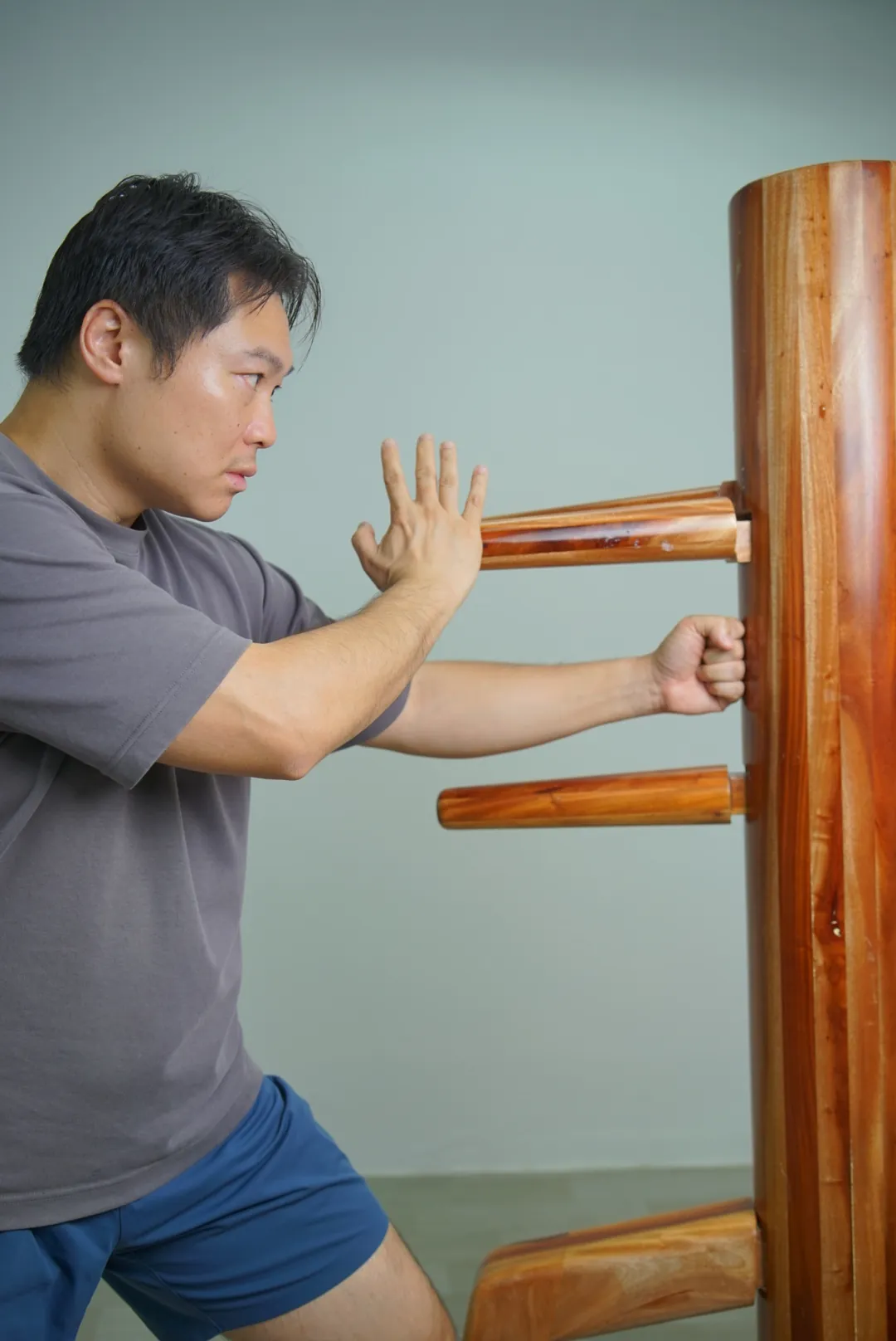
Selected supplied photographs provide context without standing in for the article’s source material.
Frequently asked questions
Is Chi Sau sparring?
No. Chi Sau is a partner-contact practice with a defined training task. Its pace, pressure and rules depend on the exercise; it is not the same as unscripted sparring.
What does Chi Sau train?
Schools use it to explore contact, pressure, position and response. The purpose and progression vary, so ask the instructor what a particular drill is designed to practise.
Can I learn Chi Sau by watching videos?
Videos may show terminology or movement, but they cannot give you a partner’s changing pressure or an instructor’s hands-on correction. Use them as context, not as a replacement for coached practice.
Can Chi Sau prove that someone can defend themselves?
No. Performance in a cooperative drill does not guarantee a result in an unpredictable situation. Chi Sau belongs within broader training and does not replace other personal-safety considerations.