Wing Chun · a practical guide
What Is Wing Chun? A Practical Guide to Its Principles and Training
Wing Chun is a Chinese martial art that places strong emphasis on efficient movement, close-distance practice, structure, angles, sensitivity and timing.
A practice organised around principles
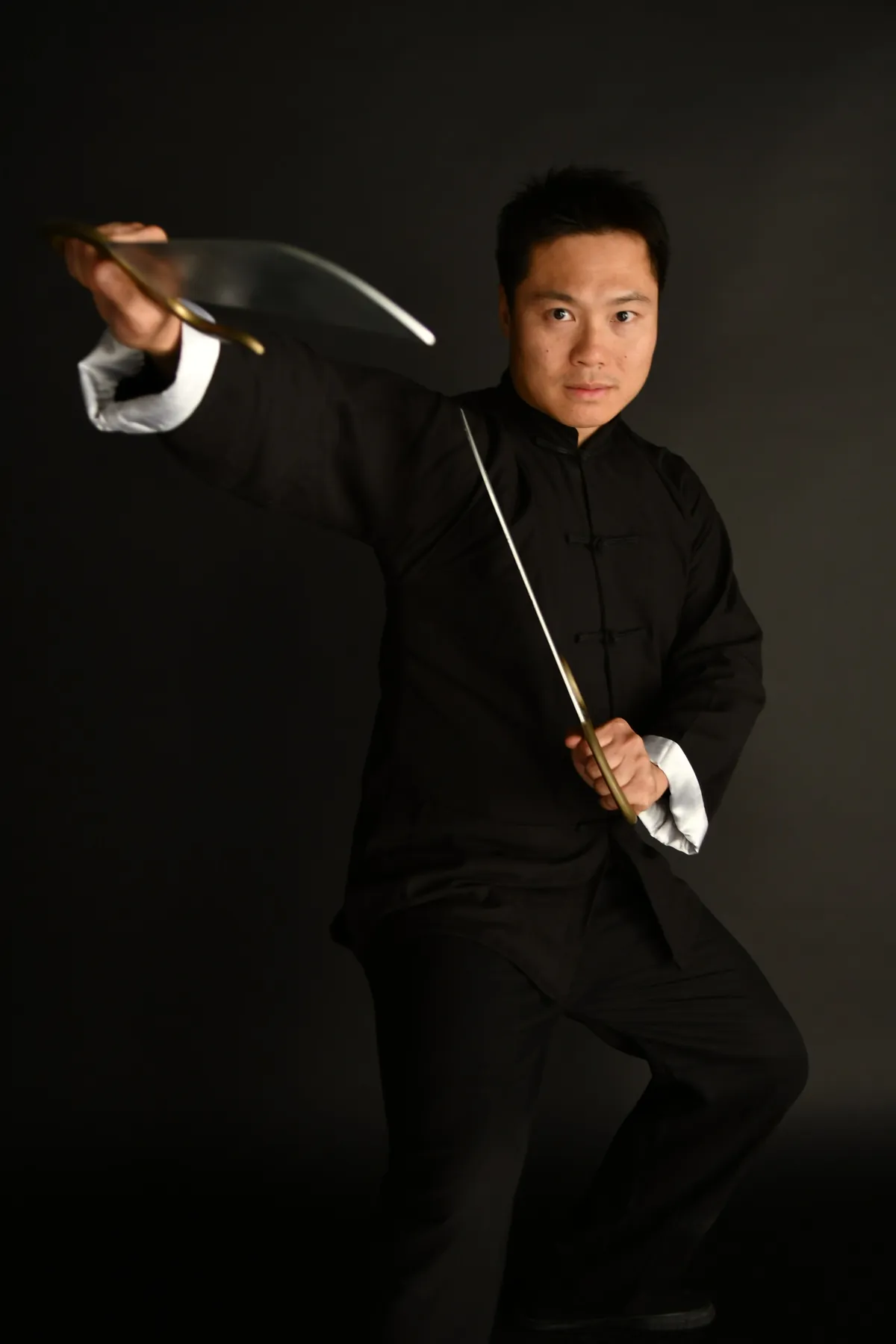
Wing Chun is not one single lesson or a catalogue of hand techniques. It is a way of organising training around principles: how you stand, how you move, how you respond to pressure and how you learn to use contact and position intelligently. Different lineages and instructors explain Wing Chun in different ways. This guide focuses on the parts a student can actually explore in training, rather than presenting one school’s history or terminology as the only version. A principle matters only when it changes what a student does with their body, their attention or their timing. That is the connection between a concept and actual practice.
Structure and balance
Structure is the organisation of the body so that movement remains connected and stable. In training, this can involve posture, stance, alignment, weight distribution and the ability to move without losing balance. This does not mean standing rigidly. A useful structure should support movement. It should help a student receive pressure, change position and use the whole body rather than relying on isolated arm strength. The exact exercises depend on the school and lineage. The important point is that structure is not a pose; it has to remain useful while a person is moving and responding. how the feet support the rest of the body; how the knees, hips and spine are aligned; whether the shoulders and arms remain relaxed enough to respond; how balance changes when stepping, turning or making contact; and how to keep a clear position while moving rather than only while standing still.
The centreline and direct movement
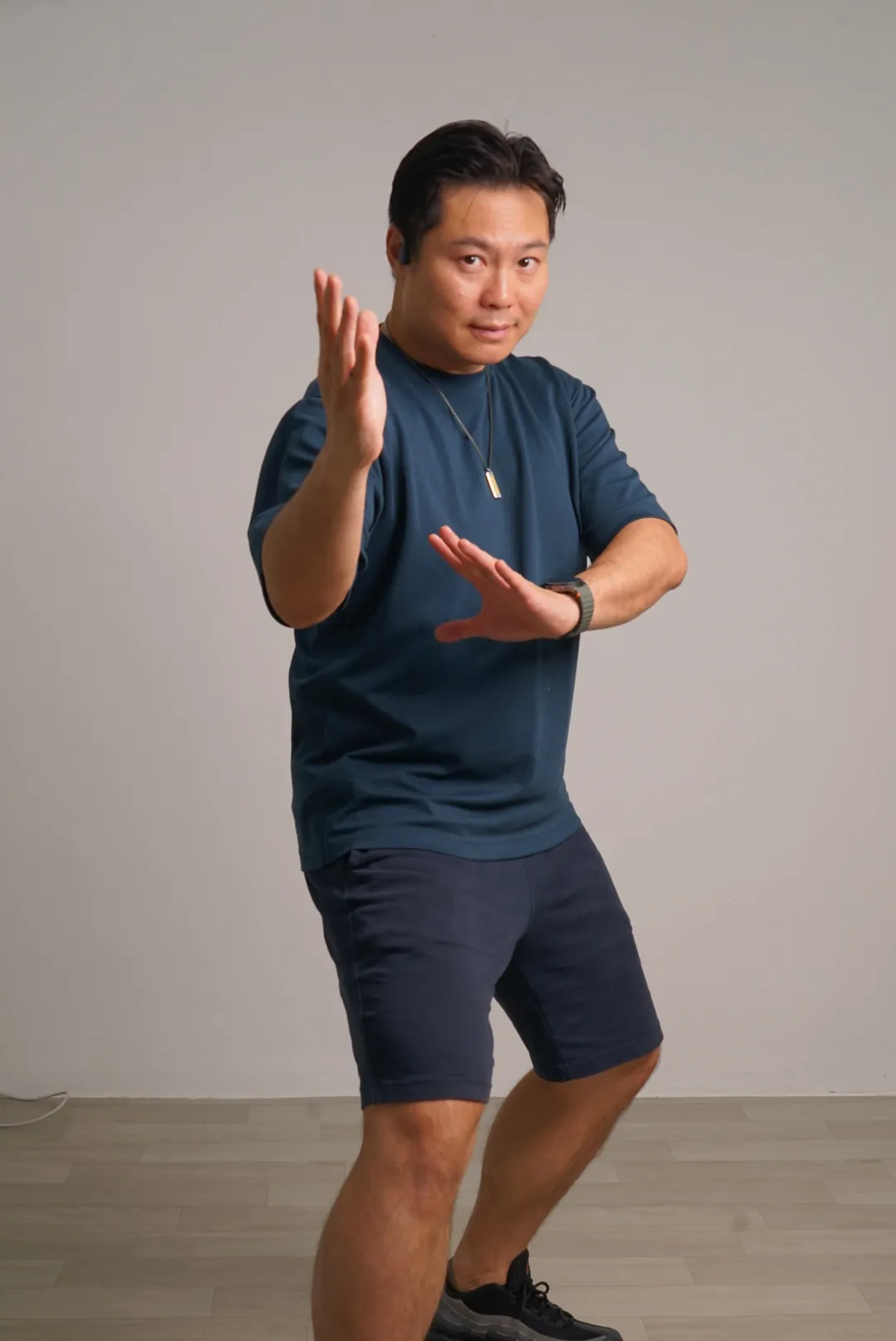
Many Wing Chun explanations refer to the centreline: an organising line through the body and the space in front of it. The idea is not simply to punch down the middle. It is to understand how position, angles and direct routes affect the time and space available in an exchange. A student may ask: Where is my balance in relation to the other person? What line am I protecting? Is my movement taking a direct route or creating unnecessary space? Can I change position without opening a large gap? Some Wing Chun schools also describe simultaneous attack and defence as an efficiency principle. Its practical interpretation varies, so it should be taught through controlled exercises rather than treated as a promise that every movement will work automatically.
Economy, relaxation, sensitivity and timing
Wing Chun is often associated with economy of movement. In practical terms, this means examining whether a movement is doing what it needs to do without adding unnecessary tension, size or decoration. Economy is not the same as moving slowly or avoiding physical effort; it is a question of using the right amount of movement for the situation. Relaxation does not mean being passive or unprepared. It means reducing unnecessary tension so that a person can notice change and respond without freezing their own movement. Sensitivity is developed through contact and partner work. It is not a mystical ability and it is not a substitute for awareness, footwork or practice under changing conditions. Timing connects these ideas. A technically correct movement performed too early, too late or from the wrong distance may not solve the problem in front of the student. Training therefore needs feedback: students should be able to feel the difference between a cooperative drill, a controlled application and a more demanding exercise.
What does Wing Chun training include?
There is no single timetable that applies to every Wing Chun school. Training can include several connected parts, each with a different purpose. Forms give students a way to study posture, coordination, lines of movement, breathing, balance and attention without a partner. Three names commonly encountered are Siu Nim Tau, Chum Kiu and Biu Jee. Their order, emphasis and interpretation can vary between lineages. Forms do not, by themselves, reproduce the timing, distance, uncertainty or feedback of partner practice. Stance, stepping and footwork make abstract ideas about structure and centreline physical. A hand movement performed from the wrong distance may be irrelevant, so students need to understand how to enter, adjust, angle, retreat and regain balance rather than treating the feet as an afterthought. The official Leo Wing Chun academy publicly describes its teaching around close-distance work, angles, relaxation, reflexes, levers, traditional forms, principles and practical applications. Current class details, locations and trial information remain on the academy route.
What is Chi Sau?
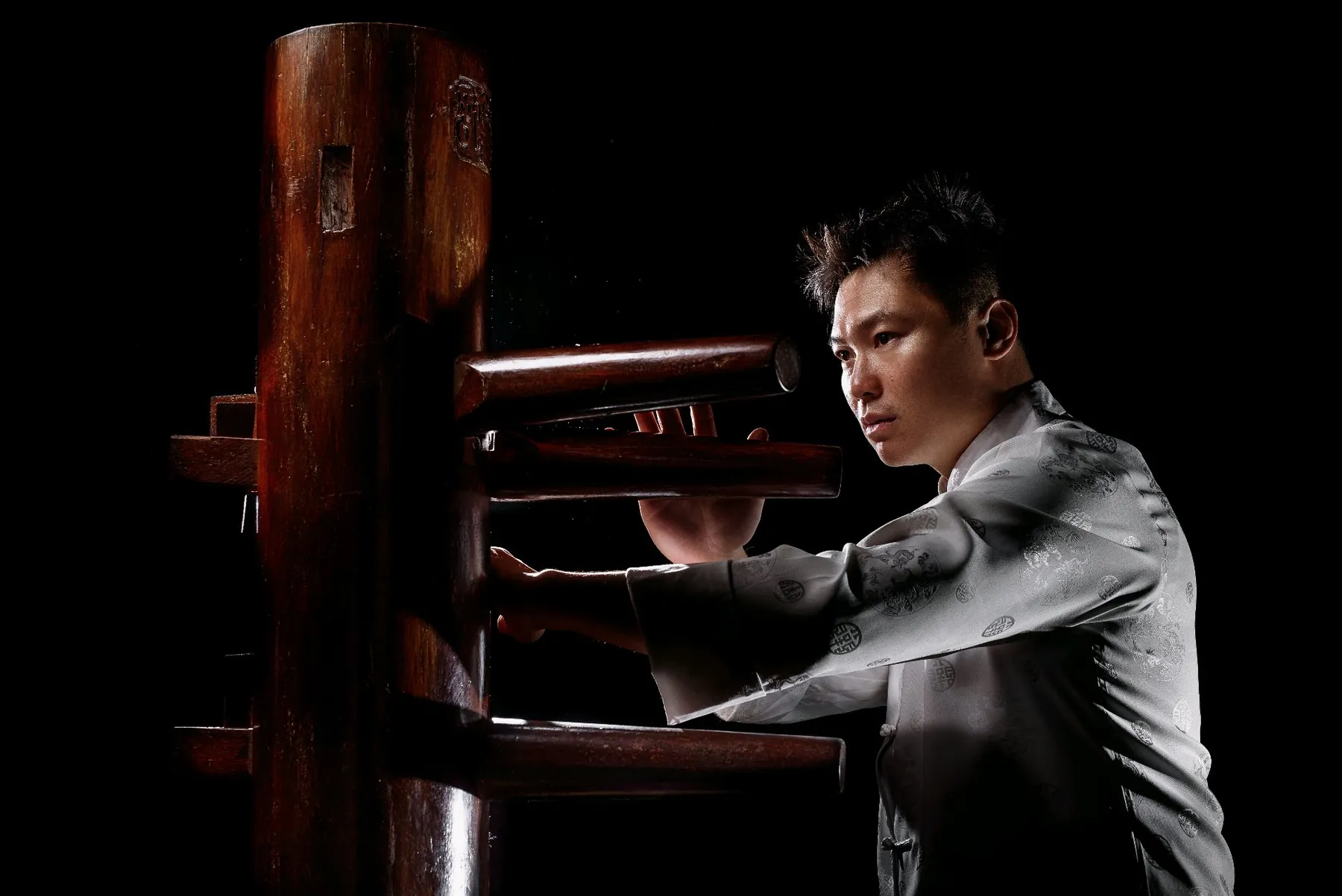
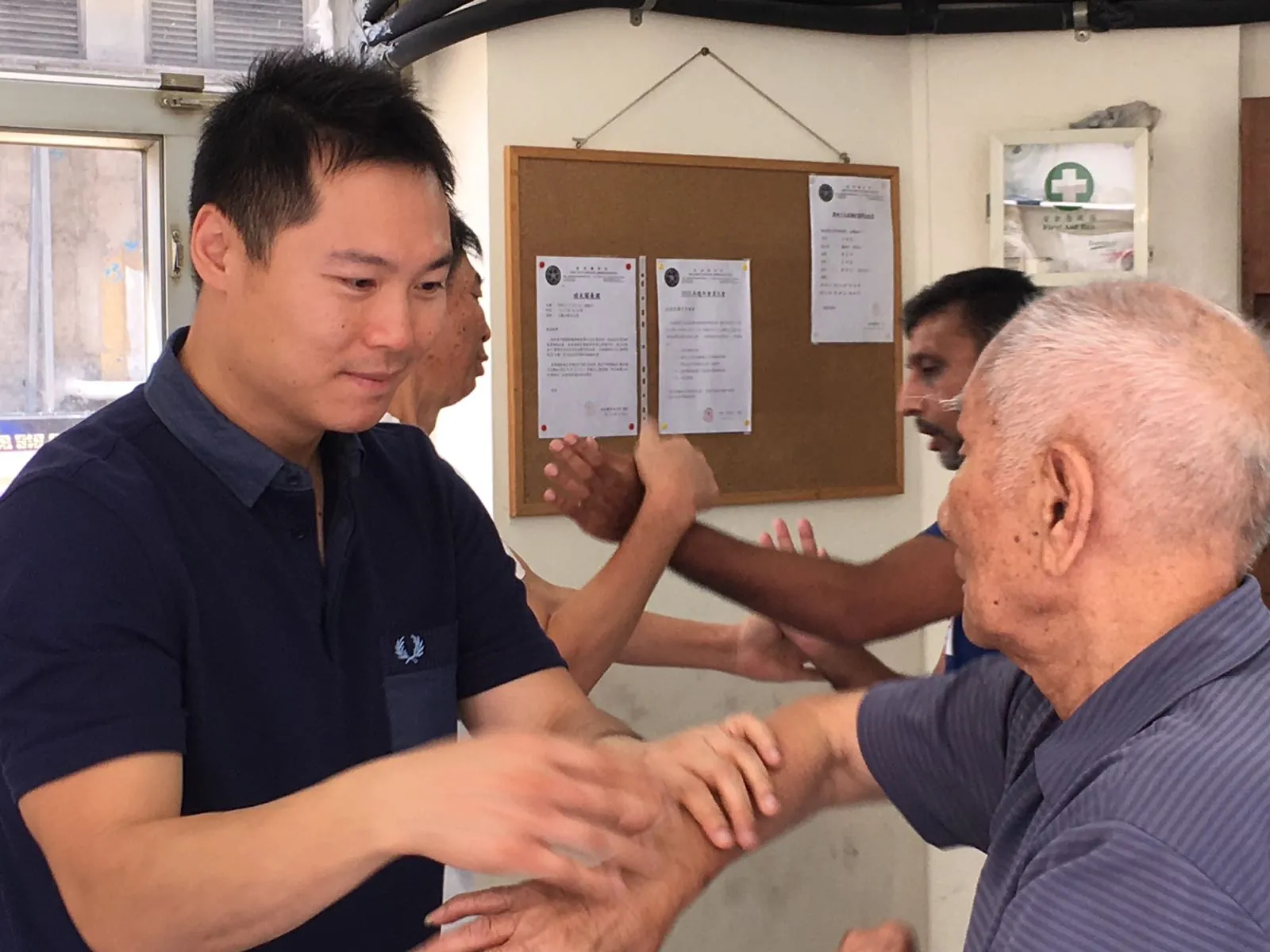
Chi Sau, often translated as “sticking hands,” is a partner-contact practice associated with Wing Chun. It is used to develop sensitivity, timing, coordination and the ability to respond to changes in pressure and position. Chi Sau is not a magic reflex exercise. It is not a standalone fighting technique, and it is not the same as unscripted sparring. It is a training method with a particular type of contact and information. A good instructor should explain what the drill is designed to teach, how it connects to other training and where its limits are. Success inside a cooperative Chi Sau exchange should not be treated as proof that every self-defence situation has been solved.
Is Wing Chun only for close range?
Wing Chun is strongly associated with close-distance practice. That does not mean a student can ignore distance, footwork or the process of entering safely. Close range is not a starting point that appears automatically; it is a relationship that changes as people move. No martial art removes uncertainty from every situation. The usefulness of any skill depends on the person, the training, the context and what happens before physical contact begins.
Wing Chun and self-defence are not the same question
Wing Chun is a martial art and a training method. Self-defence is a wider problem that can involve awareness, personal security, avoidance, communication, de-escalation, escape, legal considerations and physical action as a last resort. Martial-arts training may develop physical skills and qualities that are relevant to personal safety. It should not automatically be presented as complete self-protection training. A responsible explanation keeps the difference clear. The question of whether Wing Chun is effective for self-defence deserves its own careful discussion of training quality, pressure, limitations and context—without promising that a particular technique or style can protect everyone in every situation.
What should a beginner look for?
A beginner does not need to arrive knowing the names of every form or technique. A useful first step is to find out how a school actually teaches. A school’s lineage may be relevant, but it is not a substitute for teaching quality, clarity, safety and fit. The most useful choice is usually the one where the training goals and the instructor’s approach are clear. What does a first class include? How are beginners introduced to contact and partner work? How does the instructor explain the purpose of each drill? Is there a clear progression rather than a collection of disconnected techniques? How are safety, boundaries and injuries handled? Does the school distinguish martial-arts practice from guaranteed self-defence outcomes? Is the teaching environment respectful and suitable for your goals?
Frequently asked questions
What does Wing Chun mean? The name is written in several ways, including Wing Chun and Ving Tsun. For a student, the more useful question is what the school’s training actually teaches: its principles, exercises, progression and relationship to practical movement. Is Wing Chun suitable for beginners? It can be, but the answer depends on the school, the instructor and the student’s needs. Beginners should be introduced to stance, movement, coordination and partner work progressively, with clear contact and safety expectations. What are the Wing Chun forms? Siu Nim Tau, Chum Kiu and Biu Jee are three forms commonly associated with Wing Chun. Their order, emphasis and interpretation can vary between lineages. Forms are a training method; they do not replace partner feedback or adaptable practice. Is Chi Sau sparring? Not exactly. Chi Sau is a partner-contact drill for developing sensitivity, timing and response to pressure. It has value within a wider training programme, but it is not the same as unscripted sparring or proof of automatic self-defence ability. Does Wing Chun rely on strength? Wing Chun training often emphasises efficiency, structure, angles and relaxation rather than relying only on brute force. That does not mean strength, conditioning or physical differences disappear; training still requires coordination, consistency and appropriate physical preparation. How long does it take to learn Wing Chun? There is no honest universal timetable. Progress depends on consistency, instruction, partner practice, recovery, prior experience and what the student means by “learn.” A responsible school should explain the next stage of training without promising a fixed result.