Wing Chun · getting started
Wing Chun for Beginners: What to Expect When You Start Training
A clear, realistic guide to starting Wing Chun: what to notice in early training, how partner work develops and which questions to ask before you begin.
Start with realistic expectations
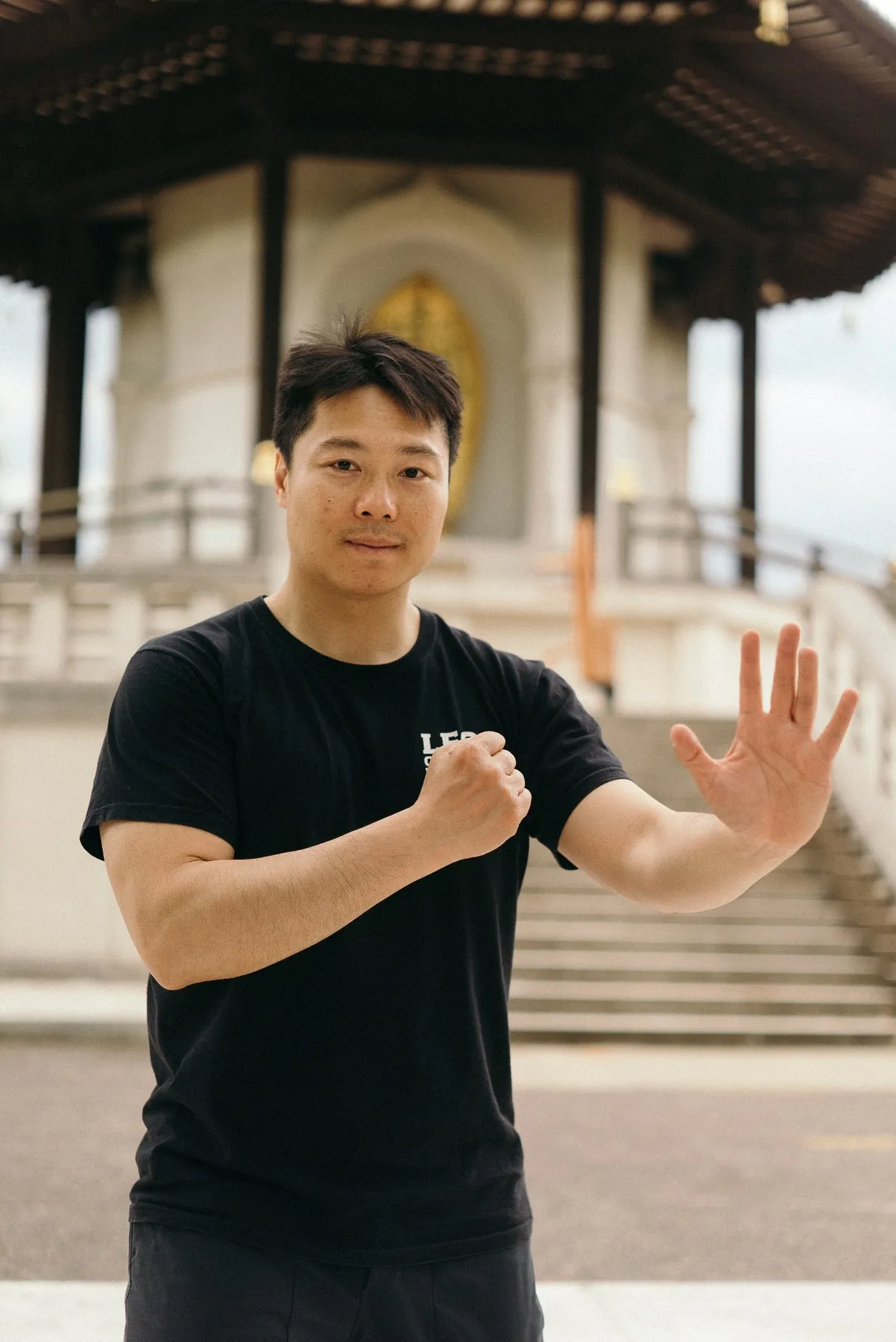
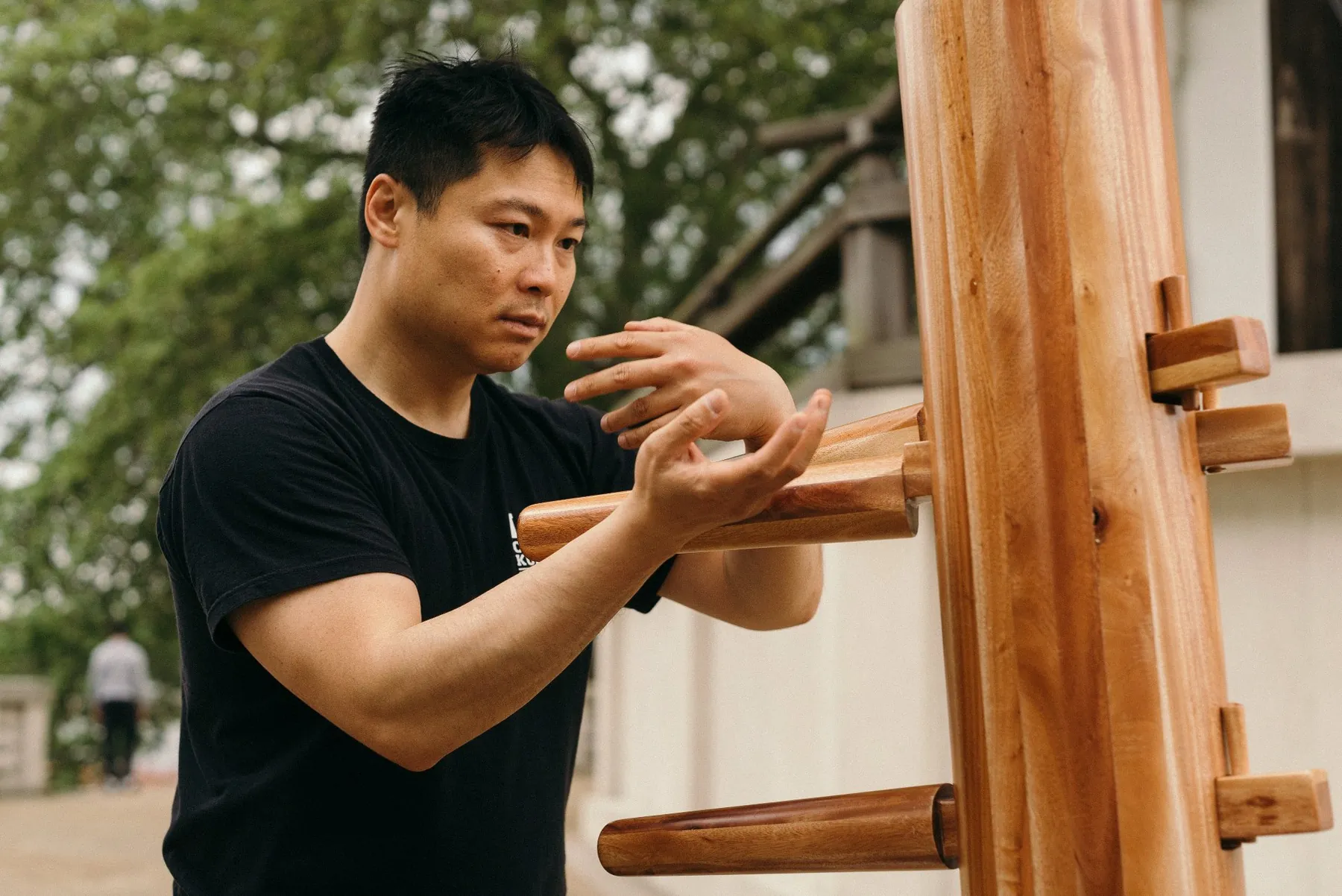
Starting Wing Chun can feel unfamiliar because a first class may involve ideas that are difficult to understand from photographs or film alone. A beginner may see a stance, a short form, partner contact or wooden-dummy work and wonder what each part is meant to develop. The useful way to begin is not to collect techniques as quickly as possible. It is to understand what the teacher is asking you to notice: how you stand, how you move, where your balance is, how you receive information through contact and how you keep a movement simple enough to repeat. This guide explains the questions a beginner can ask before starting. It separates general training context from details that belong to a particular instructor or school. The official Leo Wing Chun Chinese Kung Fu academy describes its classes as welcoming all ability levels and emphasises practical training, close-distance work, angles, relaxation, reflexes, levers, forms, principles and applications.
What should you expect from a first Wing Chun class?
A first class should give you enough information to understand the training environment without requiring you to perform advanced movements immediately. You may be introduced to the school’s approach, basic movement and manageable coordination exercises. You may also observe how students work together and how the instructor gives corrections. A useful first lesson makes the purpose of an exercise understandable. If a beginner does not yet know a movement, the instruction should give them a manageable task rather than make them feel that confusion is a failure. Contact and safety should be explained before a beginner is asked to work with a partner. The exact format is not universal. Class size, level, instructor, space and the needs of the students can all change the session. Ask the school what a first class involves instead of assuming that a film scene or an online clip represents ordinary training.
What do beginners usually learn first?
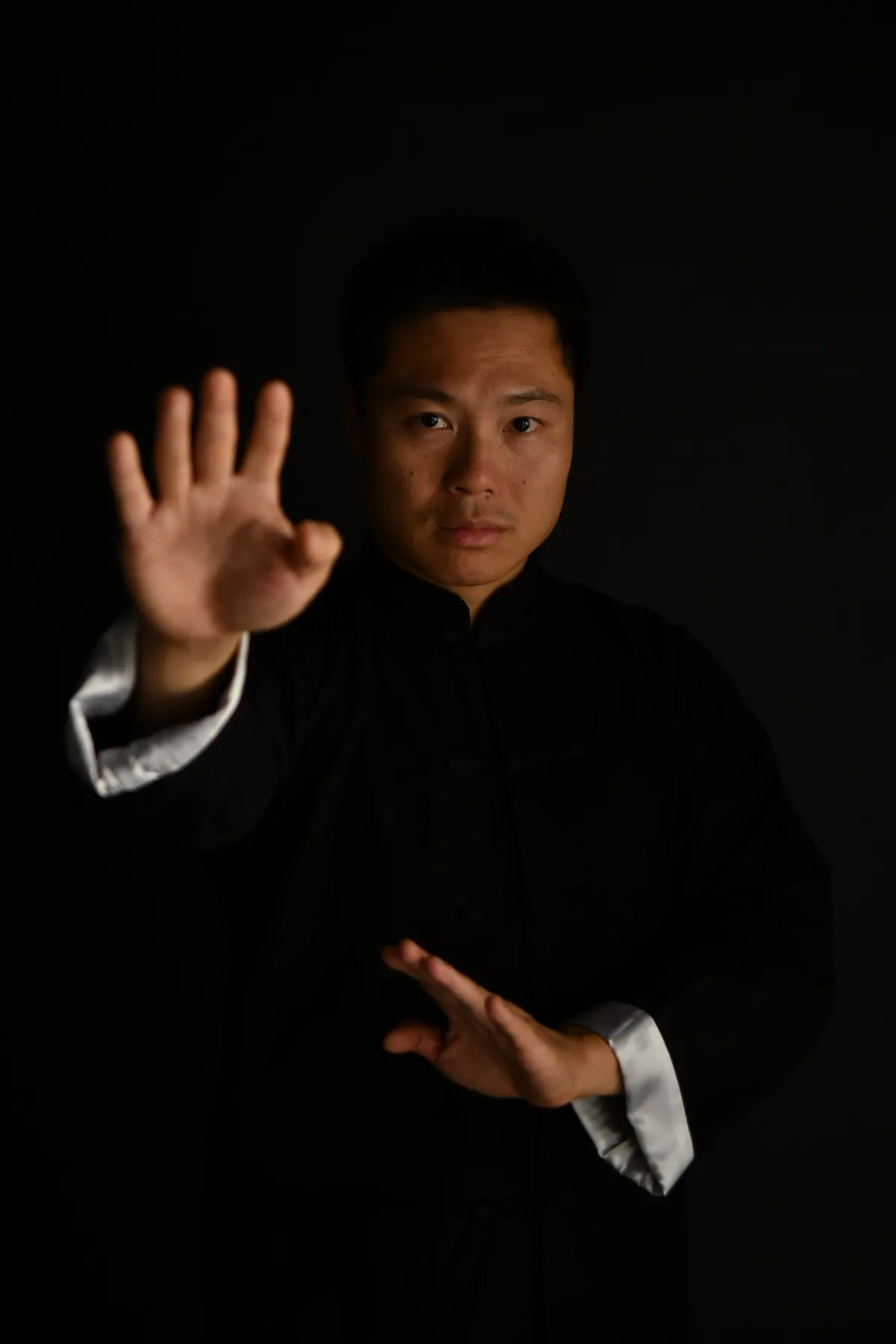
Early Wing Chun training often gives attention to posture, stance, balance, coordination and the relationship between the hands and the centreline. The purpose is to build a physical reference that the student can return to while learning new movements. A beginner may learn how to stand without unnecessary tension, shift weight without losing balance and move the hands without disconnecting them from the rest of the body. These tasks can look simple. Repeating them with attention is part of the learning. Beginners should not be pressured to make a movement look advanced before they understand its purpose. Clear correction is more useful than a long list of techniques. A student gradually learns what the feet, hips, spine, shoulders and hands are doing together.
Forms, footwork and solo practice
Forms provide a way to practise posture, coordination, lines of movement, breathing and attention without a partner. Siu Nim Tau is commonly introduced as an early Wing Chun form, although the order and interpretation of forms vary between lineages. A form is a training method, not a complete substitute for movement with another person. Footwork gives principles about distance and balance somewhere to live. It helps a beginner explore how to step, turn, enter, adjust and leave without treating the feet as separate from the hands. A student may practise alone, but solo practice cannot reproduce the timing, pressure and feedback of partner training. A useful home practice habit should be small enough to repeat consistently. It might involve reviewing a teacher-approved stance, a short form section, stepping or a coordination exercise. It should not involve inventing applications from a video and assuming that the movement has been tested.
When does partner training begin?
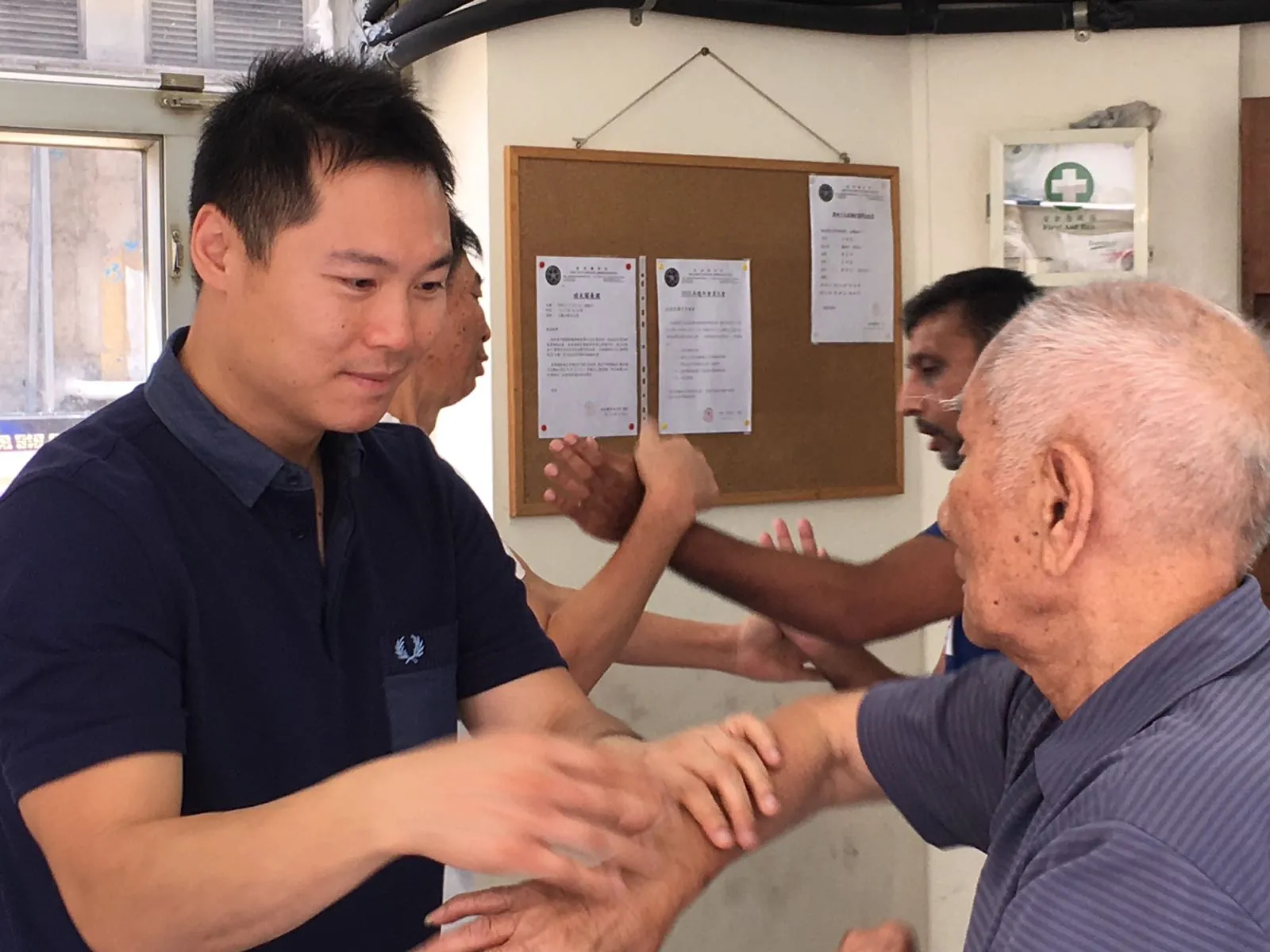
Partner practice is where a beginner starts to receive information that cannot be found by moving alone. Distance changes. Balance changes. A partner gives pressure, timing and an opportunity to notice whether a movement remains connected when the situation is less predictable. This does not mean a new student needs to begin with hard contact. Partner work can be introduced progressively, with clear instructions about speed, pressure, targets and stopping. A school should make it possible for beginners to learn how to communicate with a partner and how to keep training safe. Chi Sau, or sticking hands, is one Wing Chun partner-contact practice. It can help students explore sensitivity, timing and response to changes in pressure. It is not the same as unscripted sparring, and success inside a cooperative drill should not be presented as proof that a student can handle every self-defence situation.
What should you wear, bring and ask about?
Wear clothing that allows you to move comfortably and follow the school’s current guidance. Bring water and arrive with enough time to understand the space and any rules. The exact requirements should come from the instructor rather than a generic article. A beginner should feel able to say when a movement causes pain or when a level of contact is too much. Normal effort and unfamiliar coordination are not the same as sharp pain. Before attending, ask how the school introduces contact, responds to injuries or discomfort and adapts training when appropriate. It is sensible to mention a relevant injury or health consideration before training. A responsible school can explain its current approach and whether another format, pace or professional advice may be appropriate.
Do you need to be fit or have martial-arts experience?
Previous experience can help with coordination, but it is not the same as understanding Wing Chun. A beginner may arrive with experience from another art, sport or no formal training at all. The important question is whether the teaching can meet the student at an appropriate starting point. The official academy publicly presents its classes as welcoming all ability levels. Any question about age, fitness, body size, injuries, access needs or suitability should be discussed directly with the instructor. A responsible school can explain what it can accommodate without promising that every class is suitable for every person.
How should a beginner think about progress?
Progress is not only the number of techniques a student can name. A beginner may be improving when they can stand with less unnecessary tension, keep balance while stepping, understand a correction, coordinate both sides of the body, listen to a partner and repeat a simple exercise with more control. There is no honest universal timetable for learning Wing Chun. Progress depends on consistency, instruction, partner practice, recovery, prior experience and the student’s goal. Regular practice is usually more useful than occasional bursts of effort.
Group classes or private training?
Group training gives a student the chance to learn with different partners and observe how the same principle changes between people. Private training can offer more individual attention and a more focused conversation about a student’s goals. Neither format automatically replaces the other. The official private-sessions page describes personalised, goal-led one-to-one training and says that locations and prices vary by instructor and that sessions are by appointment. Use the official academy route for current offer details rather than relying on a fixed price or schedule in an article.
How do you choose a suitable school?
Before attending, look for clear information about what a first class includes and how beginners are introduced to partner work. During or after the class, ask whether the instructor explains the purpose of each drill and whether students are expected to train at a level of contact they have not agreed to. A school’s lineage may be important to a student, but it is not a substitute for teaching quality, safety, clarity or fit. A beginner should also be wary of claims that one short course, technique or style guarantees protection in every situation. What will a first class involve? How are beginners introduced to contact and partner work? What should I practise between classes? How does the instructor respond to injury or discomfort? What is the progression from solo work to partner work? How does the school distinguish martial-arts practice from guaranteed self-defence? Who should I contact if I have a question before attending?
Frequently asked questions
Can a complete beginner start Wing Chun? A complete beginner can ask to be introduced progressively, but suitability depends on the instructor, training environment and the person’s needs. Previous martial-arts experience is not a requirement to understand the basic questions of balance, movement, contact and attention. What happens in a first Wing Chun class? The exact sequence varies. Expect an introduction to the school’s approach and some manageable movement or coordination work. Ask the instructor in advance about warm-up, stance, forms, partner work, contact and what a beginner should bring. Do beginners learn Chi Sau immediately? There is no universal answer. Chi Sau should be introduced when the instructor believes the student understands the relevant foundations and can work safely with a partner. Ask how the school progresses from basic contact to more complex drills. Can I learn Wing Chun at home? Home practice can reinforce teacher-approved exercises, but it cannot reproduce partner timing, pressure or feedback. Use online material as context, not as a replacement for a qualified instructor and responsible partner training. How long does it take to learn Wing Chun? There is no fixed timetable. Consistent practice, good instruction, recovery and clear goals matter more than a universal number of weeks or months.