Wing Chun · distance and timing
Wing Chun vs Boxing: Different Approaches to Distance, Timing and Movement
If you are comparing Wing Chun and boxing, the most useful question is not “Which one wins?” It is: what does each training system ask you to notice about distance, timing, movement and contact?
What does boxing training emphasise?
Boxing and Wing Chun are both physical disciplines. Both require balance, coordination, timing, practice and the ability to work with another person. But the training language, rules, equipment and customary emphasis can be different. A fair comparison has to describe those differences without turning either art into a caricature. The comparison also depends on the school, teacher, student and training format. A competition boxer, a recreational boxer and a Wing Chun practitioner training mainly through forms may have very different experiences. The words “boxing” and “Wing Chun” identify broad traditions, not one identical class everywhere. England Boxing’s coaching handbook treats stance, guard and footwork as foundational technical skills. Its wider coaching framework also includes punches and defences, shadow boxing, padwork, hitting equipment, sparring, conditioning, balance, coordination and speed. This is a useful picture of how a boxing programme can connect movement, technical work, conditioning and coached practice. The International Boxing Association’s Coaches Manual describes a boxing stance as a balanced position that supports movement, attack and defence. It explains forward, backward and side steps, and gives coaching points for keeping the feet positioned so that movement does not destroy balance. That does not mean every boxer moves in exactly the same way. Stance can change with the individual, the opponent, the distance and the tactical situation. A comparison should therefore describe boxing as a trained approach to movement and striking rather than as a single fixed posture.
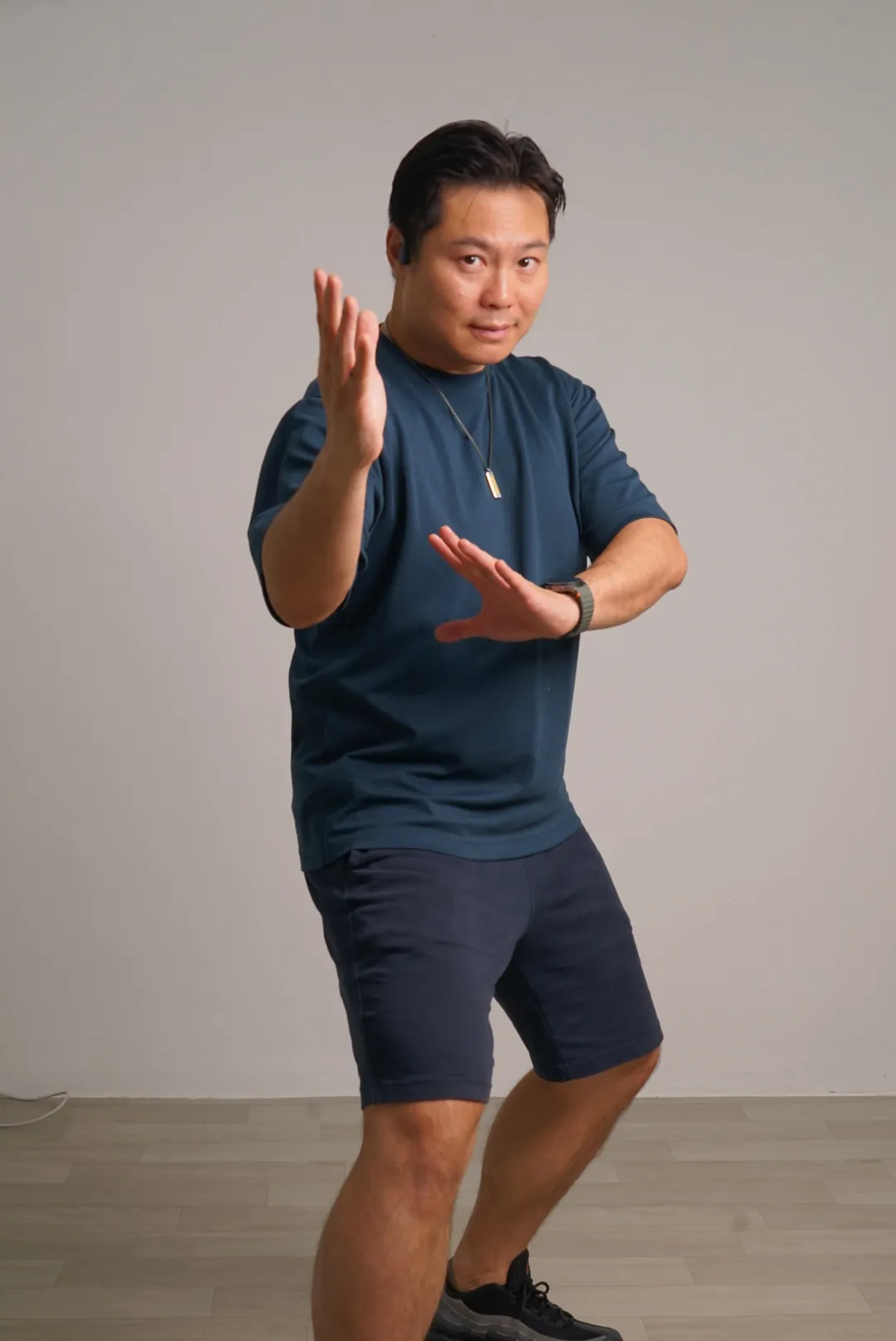
What does Wing Chun training emphasise?
The official Leo Wing Chun Chinese Kung Fu page describes its own teaching emphasis as close-distance combat and self-defence, with angles, relaxation, reflexes, levers, traditional forms, principles and practical applications. That is the academy’s public description and should not be rewritten as a universal claim about every Wing Chun lineage. A public educational explanation from the International Wing Chun Academy discusses centreline theory, front-on stance and guard, direct movement, structure and mobility. Those ideas are common reference points in Wing Chun discussion, but the terminology and interpretation can vary between teachers and lineages. For a beginner, the important point is that Wing Chun is not only a collection of hand movements. It can ask the student to study posture, balance, the relationship between the hands and the body, contact, angles and the way a person enters or maintains a position. The quality of that learning depends on how the instructor connects drills to movement that changes.
Distance: long, medium, short and close contact
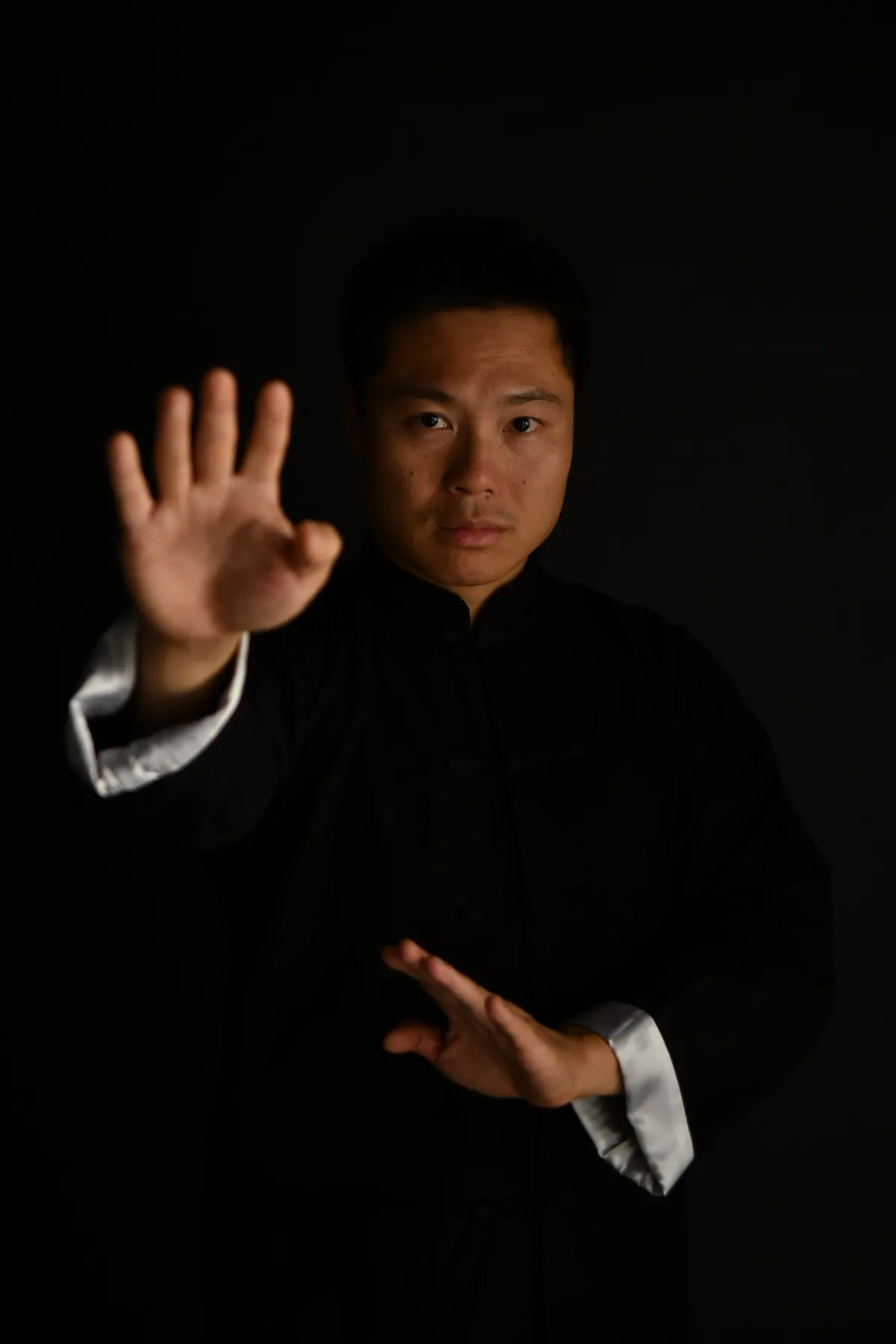
The IBA Coaches Manual divides boxing distances into long, medium and short ranges. In its description, long distance requires a boxer to step before delivering a punch; medium distance allows punches without moving forward; and short distance is close enough for short-range punches such as hooks and uppercuts. This vocabulary helps show that boxing is not simply “long-range punching.” A boxer may manage distance with steps, punches, feints, defensive movement and changes of rhythm. The range is a relationship that changes during an exchange. Wing Chun is often associated with close-distance practice. The official academy describes its work through close-distance combat, while the International Wing Chun Academy’s centreline explanation presents direct lines, stance and guard as important concepts in its own system. The practical comparison is therefore not “boxing stays far away and Wing Chun always moves in.” A boxer may work at several distances. A Wing Chun student still has to understand how distance opens and closes, how to enter, how to maintain balance and what happens when the intended position is not available.
Stance and guard: side-on and front-on are not automatic answers
The England Boxing handbook gives coaching points for a boxing stance that include balance, movement in different directions, a reduced target area and an offset rear foot. It describes the front and rear feet as angled rather than completely square to the opponent. The IBA manual also describes a side-on boxing stance with a lead hand, rear hand and protected chin, while noting that different boxing situations can call for different weight distribution. The International Wing Chun Academy presents a front-on stance and guard as part of its centreline and structure explanation. For a Wing Chun student, this may be used to think about protecting the centreline, keeping both sides available and responding to a partner’s position. Neither label should be treated as a universal verdict. A side-on stance can support movement and reduce the target area in the boxing context described by the coaching sources. A front-on stance can support a different relationship to the centreline and both sides of the body in the Wing Chun explanation. What matters in practice is whether the student can move, keep balance, protect themselves and respond to changing pressure.
Timing: seeing the opening or changing the relationship
Boxing training often gives a student many ways to study timing: stepping with a punch, returning to guard, using a feint, changing distance, defending and countering. The IBA manual describes feints as movements intended to deceive and prepare an attack, while its distance section connects different ranges to different punches and movements. Wing Chun training may use timing through direct movement, contact, structure and the relationship to the centreline. A student may practise responding when pressure changes rather than only responding to a visible punch. The particular drill, progression and interpretation depend on the school. These are not completely separate worlds. A boxer needs to read position and timing. A Wing Chun practitioner needs to read position and timing. The difference is often in the training questions: what information is emphasised, how the partner provides it and which responses the student has rehearsed.
Contact and training assumptions
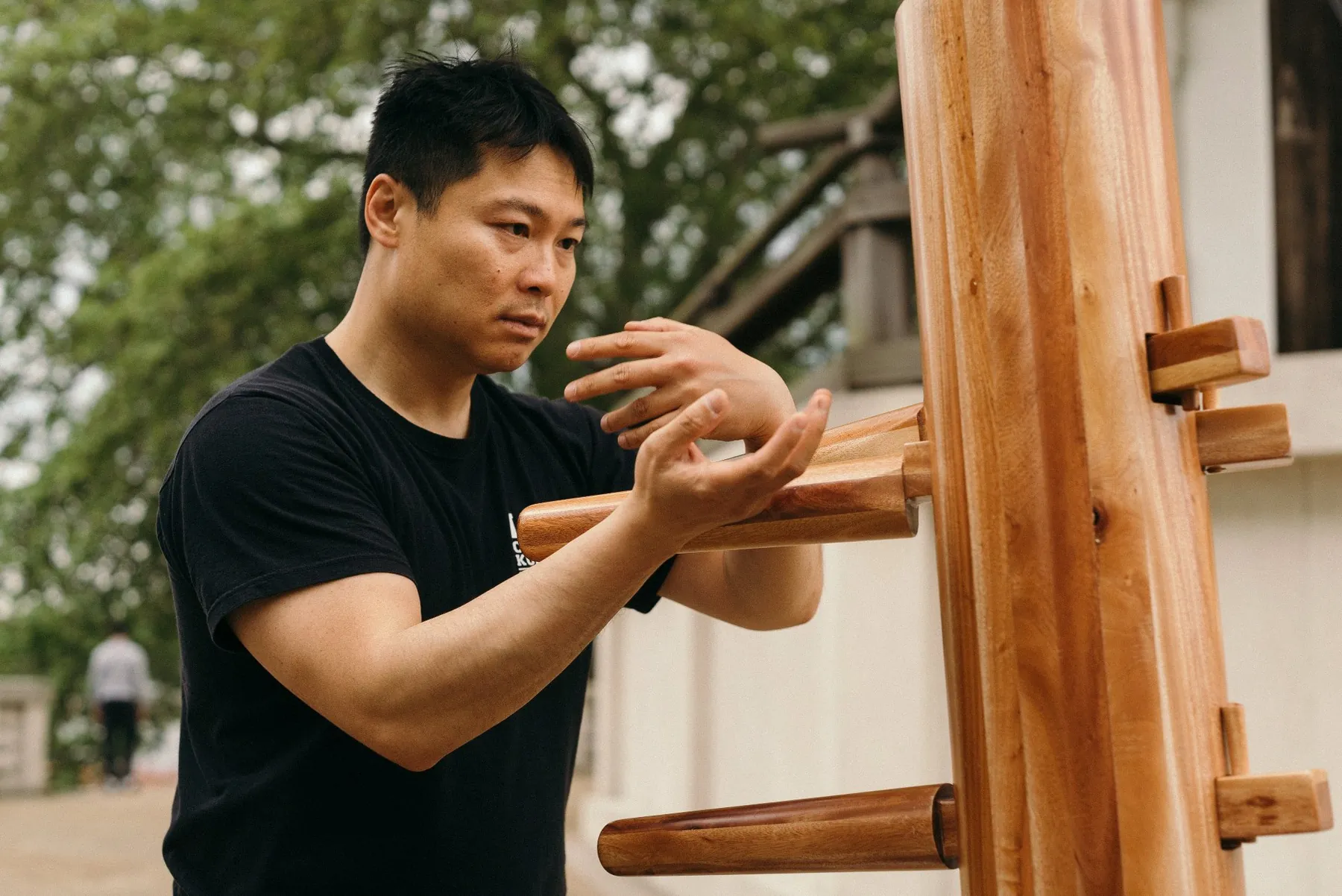
A boxing class may include shadow boxing, padwork, hitting equipment and sparring, alongside stance, guard and footwork. England Boxing places safety, health and welfare at the centre of coaching and describes graded challenges, risk assessment, hand protection, safeguarding and injury considerations. Wing Chun partner work may include contact drills such as Chi Sau, forms, applications, pads or other exercises depending on the school. Contact can help a student explore pressure, direction and timing, but a cooperative drill is not the same as unscripted sparring. Success inside one exercise should not be presented as proof that the student can deal with every situation. The useful question is not whether a class uses the word “pressure.” Ask what kind of pressure is being trained, how predictable it is, what equipment and rules apply, how intensity is increased, and how the instructor prevents a student from confusing a drill with a guaranteed outcome.
What might each art develop?
A boxing programme built around the coaching principles above may give a student structured practice in movement, guard, punches, defences, conditioning, equipment work and controlled opposition. A Wing Chun programme may give a student structured practice in forms, stance, centreline, angles, relaxation, contact, sensitivity and applications, depending on the lineage and school. This is not a scorecard. A student’s result depends on teaching quality, consistency, body awareness, training partners, recovery, rules, experience and the way practice is connected to changing movement. A photograph of a stance cannot prove how a school trains. A dramatic demonstration cannot answer every question about transfer.
Is Wing Chun better than boxing?
There is no responsible universal answer. “Better” depends on the goal and the comparison being made. Someone interested in boxing competition needs to consider a boxing gym’s coaching, rules, competition pathway, sparring culture and current suitability. Someone interested in Wing Chun needs to examine the school’s teaching, progression, partner work, forms, applications and how it explains the relationship between drills and practical movement. A person choosing between them should also ask what they enjoy enough to practise consistently. A clear, safe and well-taught programme is usually more useful than a style label that promises an easy result.
Can boxing and Wing Chun be combined?
Cross-training can expose a student to different timing, distance, posture, rhythm and training problems. But the benefits and trade-offs depend on the student’s goals and the depth of each practice. Adding a second art can give useful perspective; it can also create conflicting habits or spread limited recovery time too thinly. The personal comparison in this section still requires Master Leo’s approval. The public biography documents his training in several martial arts, but it does not by itself establish a publishable boxing history, level or first-hand boxing comparison. Do not add a claim about his boxing training without his direct confirmation.
What changes in a self-defence situation?
This article is not a promise that Wing Chun or boxing will protect someone in every situation. Martial-arts training and personal protection are not identical. Awareness, avoidance, communication, de-escalation, escape, context, law, multiple people, weapons, surprise and injury can all change the problem before a punch or contact drill is relevant. A style comparison cannot remove those variables. It should not encourage a reader to test a technique in the street or assume that a sport rule set, a cooperative drill or a film scene represents an uncontrolled event. The narrower question of whether Wing Chun is effective for self-defence belongs in the dedicated self-defence article, where training quality, resistance, limitations and context can be examined separately.
Questions to ask before choosing a class
If you are deciding between a Wing Chun class and a boxing class, ask each instructor: The answers will often tell you more than a debate about which style is “better.”
- What does a first class involve?
- How are beginners introduced to movement, contact and intensity?
- What type of partner work, padwork or sparring is included?
- How does the class distinguish a drill from unscripted practice?
- How are injuries, discomfort and boundaries handled?
- What are the training goals: competition, fitness, traditional practice, practical applications, or something else?
- How can a beginner practise between sessions?
Next step
For a neutral introduction to Wing Chun principles and training, read What Is Wing Chun?. For a beginner-focused explanation of first classes and early training, read Wing Chun for Beginners. For a different practice-focused perspective, explore Master Leo’s Hong Kong Kung Fu Training Trip. To see Master Leo’s current personal training route, visit Train with Master Leo. Current London academy information belongs on the official Leo Wing Chun Chinese Kung Fu website.
Frequently asked questions
Can a boxer learn Wing Chun?
Yes, a boxer can approach Wing Chun as a new training language, but boxing experience does not automatically transfer to every Wing Chun drill. The student still has to learn the new school’s stance, contact, terminology, progression and expectations.
Can a Wing Chun student learn boxing?
Yes, a Wing Chun student can study boxing, but the student should expect to practise a different coaching framework for stance, guard, punches, defence, movement and range. The same words can have different meanings in different schools.
Is Wing Chun only close range?
Wing Chun is strongly associated with close-distance work, but a student still has to understand the process of entering, adjusting and regaining position. The official academy describes its own emphasis as close-distance combat; that should not be turned into a universal claim that Wing Chun ignores distance or footwork.
Is boxing only long range?
No. The IBA Coaches Manual describes long, medium and short boxing distances and explains that different distances involve different punches and movement.
Does boxing have better footwork than Wing Chun?
That is too broad to be a useful statement. Boxing coaching materials explicitly teach stance and footwork as foundational movement skills. Wing Chun schools also teach movement, balance, stance and position, but the methods and goals can differ. Compare the actual classes rather than assuming that one label tells you everything.
Is Chi Sau the same as sparring?
No. Chi Sau is a Wing Chun contact practice with a particular training structure. It can develop sensitivity and timing, but it is not automatically the same as unscripted sparring or a complete test of self-defence ability.