Wing Chun · training equipment
The Wing Chun Wooden Dummy: Purpose, Practice and Limits
The Mook Yan Jong is a familiar Wing Chun training tool. This guide looks at what a fixed wooden dummy offers, how curricula differ and what it cannot do.
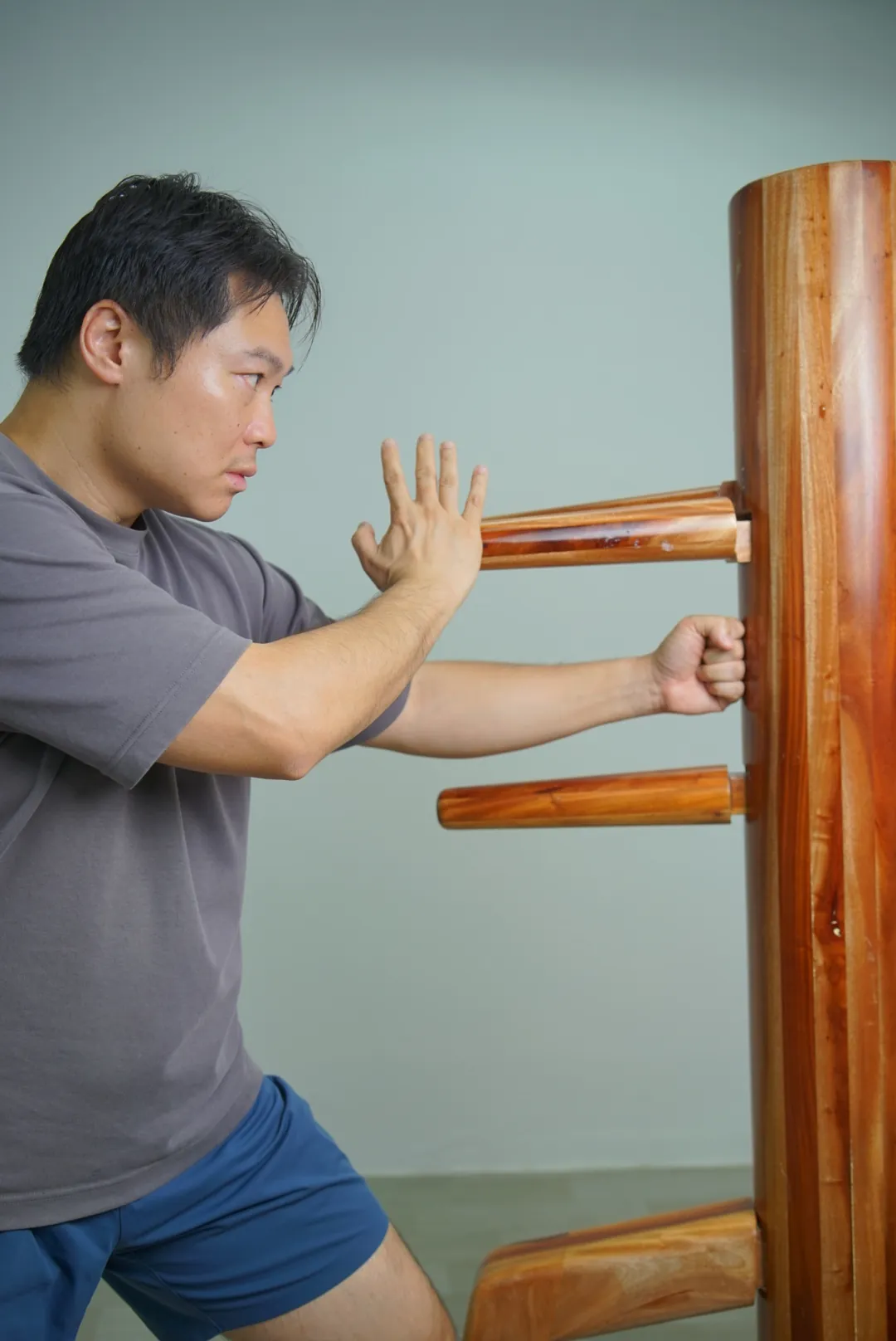
What is the Wing Chun wooden dummy?
The wooden dummy, commonly called the Mook Yan Jong, is a fixed piece of training equipment used in some Wing Chun curricula. It gives a student a consistent physical reference for repeating a movement sequence and organising their position around a non-moving structure. The Hong Kong Intangible Cultural Heritage entry for Yip Man Wing Chun describes the dummy as a major training tool in that specific inventory. The International Wing Chun Academy presents Mook Yan Jong as one of the forms in its own programme. These sources show its place in named teaching contexts; they do not establish one identical dummy syllabus for every lineage.
What a fixed training surface can offer
A fixed tool can make repetition easier to compare. A student can revisit a movement path, notice where their arms and body are in relation to the dummy and practise coordinating a turn or step with the sequence being taught. Because the equipment stays in place, the learner can return to the same reference point from one repetition to the next. That consistency is useful for practice, but it is not the same thing as a person responding. The dummy supplies a stable surface, not judgement about the movement. A student still needs to understand what the instructor wants them to notice and whether a particular school’s routine is being performed as intended.
The dummy is not one universal syllabus
The place of dummy training, its routines and when students encounter it can vary by school and lineage. The official Hong Kong heritage entry is specifically titled Yip Man Wing Chun. The academy curriculum cited here lists Mook Yan Jong alongside other forms. Neither source means that every Wing Chun group teaches the same sequence in the same order. For that reason, the most helpful question is not whether a student has reached a supposedly universal dummy stage. Ask the instructor what the exercise is meant to develop, what foundations should come first and how the tool fits with other parts of that school’s programme.
What the dummy can help you rehearse
Under instruction, a student may use the dummy to repeat a taught sequence, coordinate movement around a fixed structure and become familiar with the spatial relationships in that exercise. It can offer a practical place to revisit material between lessons if the instructor has explained what to work on and how to keep the practice appropriate. If the task is unclear, more repetitions may repeat the same uncertainty. Ask the instructor what to notice and which detail matters in this exercise.
Why the dummy cannot replace a partner
A wooden dummy does not change distance, withdraw, add unplanned pressure or respond to a student’s movement. It cannot provide the timing and changing information that another person brings to partner practice. Its fixed limbs and position are a useful constraint for a particular exercise, not a model of every human body or interaction. This matters because Wing Chun also includes training where another person supplies the response. Partner exercises, including Chi Sau, involve information that a static object cannot return. Dummy work and partner work can complement each other, but one does not stand in for the other.
A tool, not proof of fighting ability
Being comfortable with a dummy sequence does not prove that a student can apply it against a person, and striking a fixed surface is not a test of general combat ability. The equipment cannot introduce the choices, movement and uncertainty of a live partner. It should not be sold as a shortcut to mastery or as a guarantee of self-defence. A more measured way to assess progress is to ask whether the student understands the exercise, can repeat it with appropriate control and can connect the lesson to other training when the instructor explains that connection. These are learning questions, not promises about what will happen in a confrontation.
How to approach dummy practice
If your school includes dummy work, ask what the sequence is for and how it relates to forms, movement and partner exercises. Follow the teacher’s guidance about pace and intensity. A beginner does not need to guess at an advanced routine from photographs or copy a sequence without knowing which details matter in that school. If you are considering a dummy for home use, first ask the instructor whether it fits your current training and how to practise safely with the equipment available. The official academy page is the best place to check its current classes; private-session information can help with questions about individual instruction. Details vary, so confirm directly rather than assuming a standard schedule.
Keep it in the wider practice
The dummy is most useful when treated as one training resource among several. Forms allow solo rehearsal; a fixed dummy offers a repeatable spatial reference; a partner can respond and change the information available; an instructor can explain how those pieces connect. Each format has a different job.
From the archive
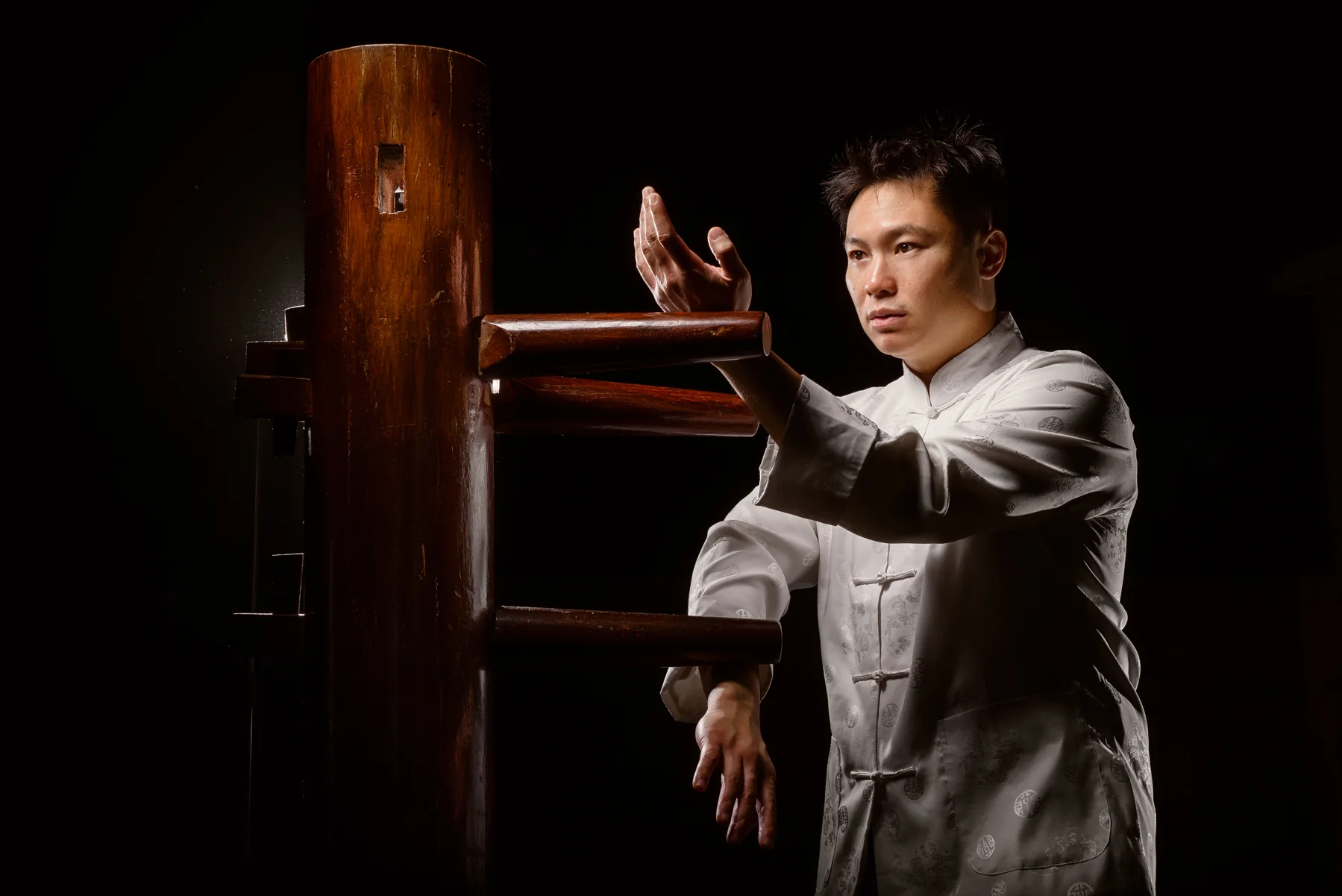
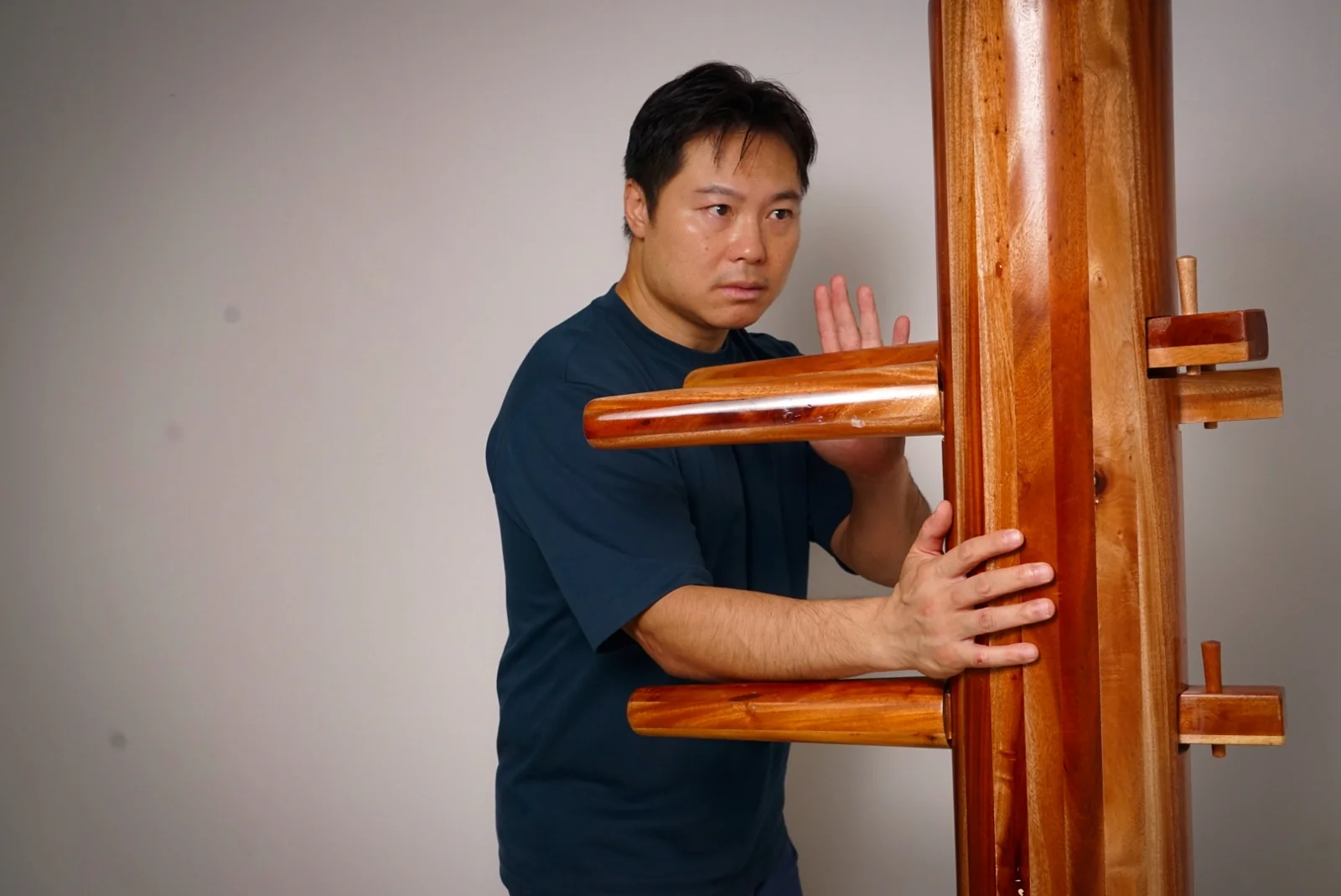
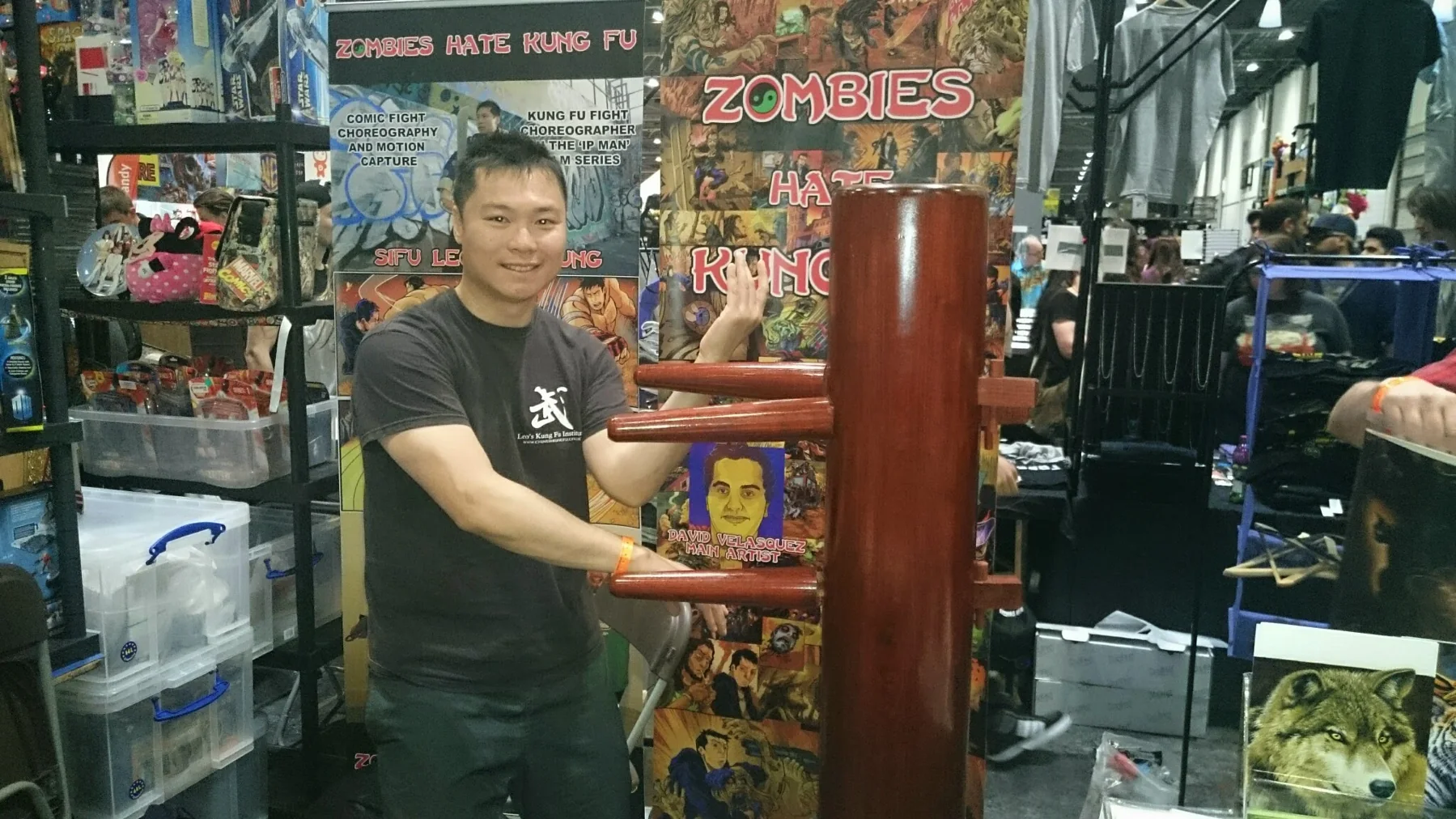
Selected supplied photographs provide context without standing in for the article’s source material.
Frequently asked questions
What does a Wing Chun wooden dummy train?
It gives a student a fixed reference for rehearsing movements and sequences taught by their school. The specific routine and purpose vary, and the dummy cannot respond like a partner.
Is wooden-dummy training a form?
Some schools present Mook Yan Jong as a form; for example, it appears that way in the International Wing Chun Academy’s curriculum. Terminology and progression are not identical across every lineage.
Can a wooden dummy replace partner training?
No. A fixed dummy cannot change pressure, timing or distance in response to a student. It can complement partner work, but it cannot supply a person’s changing feedback.
Do you need a wooden dummy to learn Wing Chun?
Training equipment and curricula vary. Ask your instructor whether dummy work is part of the school’s programme and whether it is appropriate for your current stage.